

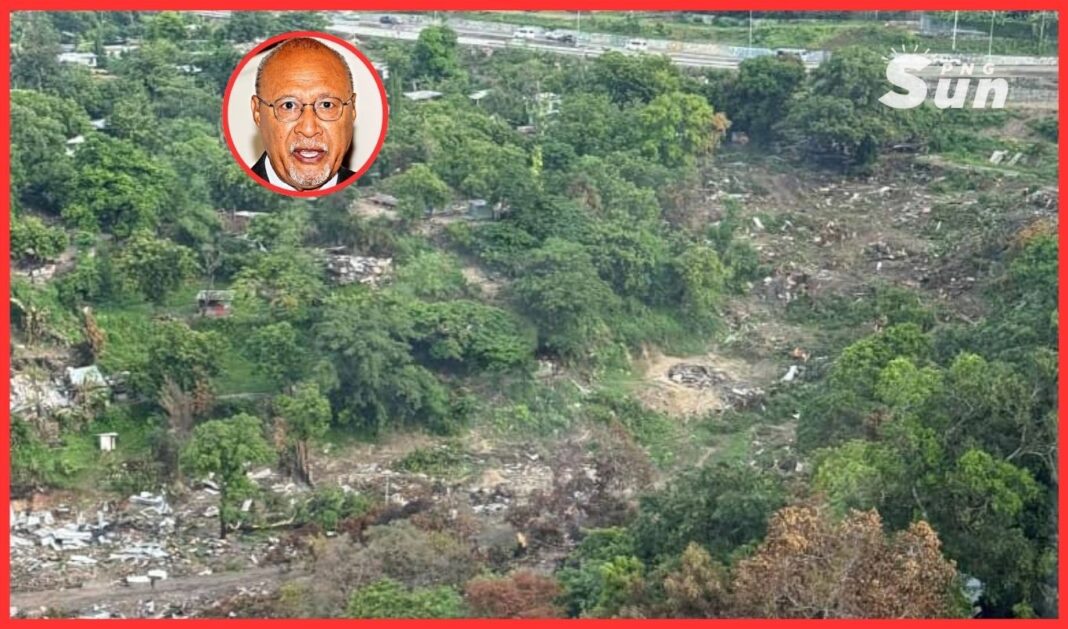

Parliamentary Opposition Spokesman for Lands, Physical Planning and Urban Development, Sir Puka Temu, says evictions alone will never solve the country’s growing informal settlement crisis.
He was making a statement on the 2-Mile eviction in Port Moresby today.
In that statement, Sir Puka warned that without competent urban planning, Vagrancy Act, meaningful land reform, stronger rural development and decisive leadership, situations like the recent Two-Mile evictions will continue to recur.
“Evictions are not a solution in themselves,” Sir Puka said.
“What Papua New Guinea needs is competent urban planning, effective land administration, land reform, rural development, and leadership that addresses the root causes of settlement growth rather than reacting to its consequences.”
Commenting on the recent evictions at Two-Mile, Sir Puka said the issue must be understood in its proper context, stressing that it did not arise overnight nor was it an isolated incident.
“This situation is the product of long-standing failures in urban planning, land administration and governance within the National Capital District and at the national level,” he said.
Sir Puka said the NCD administration had, over many years, failed to properly manage the city’s planning responsibilities, allowing illegal structures to emerge and expand unchecked.
NCDC, however, has a master Urban Development Plan for the entire city.
“Illegal buildings were allowed to grow from isolated structures into a full settlement. This did not happen without warning. It happened because of weak enforcement, poor coordination between agencies and a lack of competent management,” he said.
He added that when authorities allow illegal developments to become entrenched over long periods, sudden evictions become inevitable, with ordinary families bearing the human cost instead of those responsible for planning failures.
Sir Puka also criticized the lack of practical planning for vacant State land in Port Moresby, noting that large tracts remain undeveloped or underutilized despite rising demand for affordable housing.
“No pragmatic strategy has been implemented to convert State land into organized housing, serviced settlement zones or planned urban development,” he said. “Allowing informal occupation to take root is neither humane nor sustainable.”
He said illegal settlements must be addressed responsibly and systematically, beginning with proper social and land-use studies before any eviction is carried out.
“Authorities must know who is living there, how long they have been there and what their circumstances are. Evictions without planning simply shift families from one location to another,” Sir Puka said.
He added that any relocation must include access to water, sanitation, roads, schools and health services.