

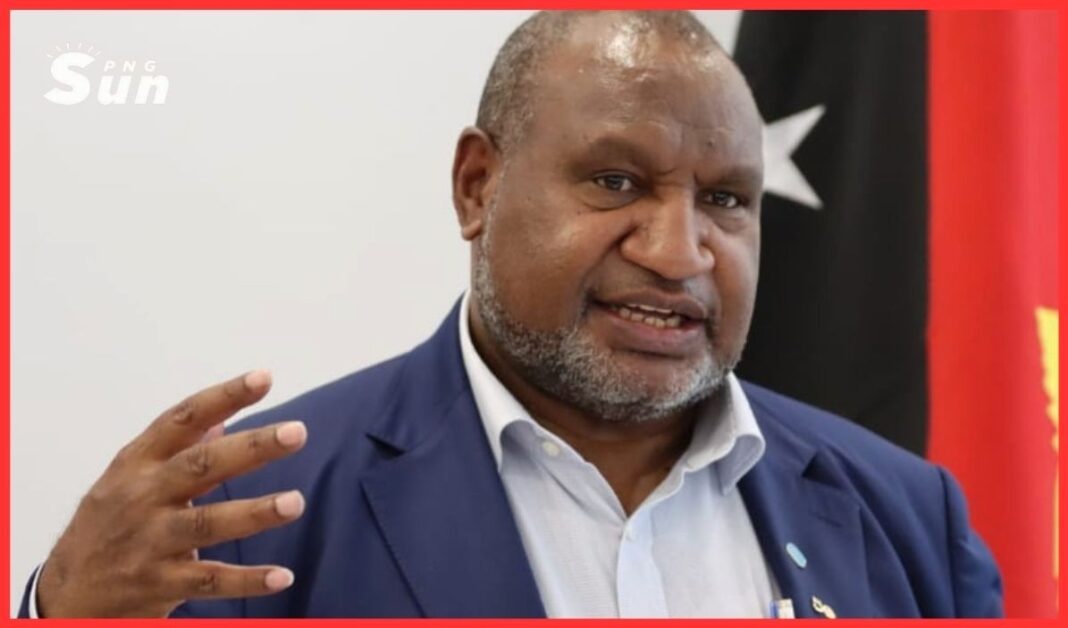

Prime Minister, James Marape yesterday addressed concerns following Papua New Guinea’s designation by the Financial Action Task Force (FATF) as a jurisdiction under increased monitoring, commonly referred to as the “grey list.”
He described it as an exposure of system weaknesses and a clear reference point for improvement.
Read previous article on: https://www.pngbusinessnews.com/articles/2025/5/prime-minister-marape-instructs-state-agencies-to-work-overtime-to-avert-grey-listing
He said his government is committed to anti-money laundering efforts and exiting the country from the grey list at the earliest.
He cited recent enforcement actions, including the freezing of approximately K214 million in a trust account, as evidence that oversight mechanisms are active.
The designation followed the conclusion of the FATF plenary on 13 February 2026, where Papua New Guinea and Kuwait were added to the list of countries working with international partners to strengthen anti-money laundering and counter-terrorism financing frameworks.
Prime Minister Marape said his recent address to Heads of Departments was intended to reinforce Government efforts to lift transparency, accountability, and compliance standards across public financial management and service delivery.
“My address to public sector heads was about stepping up in key areas — ensuring that Government systems are robust and that oversight is strengthened in critical financial processes,” the Prime Minister said. “The FATF decision should not be seen as a judgment against Papua New Guinea, but as formal recognition that we are working constructively with partners to address identified gaps and align with global standards.”
He highlighted historic reforms already enacted, including the establishment of the independent Commission Against Corruption and the introduction of Undisclosed Wealth provisions within the Proceeds of Crime framework.
“With the legal and institutional architecture now in place, responsibility lies with implementing agencies to fully exercise their statutory mandates,” he said, noting the roles of the Royal Papua New Guinea Constabulary, ICAC, the Ombudsman Commission, the Financial Analysis and Supervision Unit, regulators, and the banking sector.
The Prime Minister said coordination among Finance, Treasury, and National Planning has been strengthened, with independent accounting firms engaged to audit public accounts and track displacement and compensation claims.
Addressing investor confidence, Prime Minister Marape reassured domestic and international investors that Papua New Guinea remains a stable destination for long-term investment, noting continued confidence from established mining, petroleum, and commercial investors.
“We have exited grey lists before, and we will do so again — by implementing reforms, strengthening institutional capacity, and meeting our international obligations in a timely and credible manner,” he said.
The Prime Minister concluded by reaffirming the Government’s commitment to work closely with domestic stakeholders and international partners to meet global standards on anti-money laundering, counter-terrorism financing, and financial transparency.