
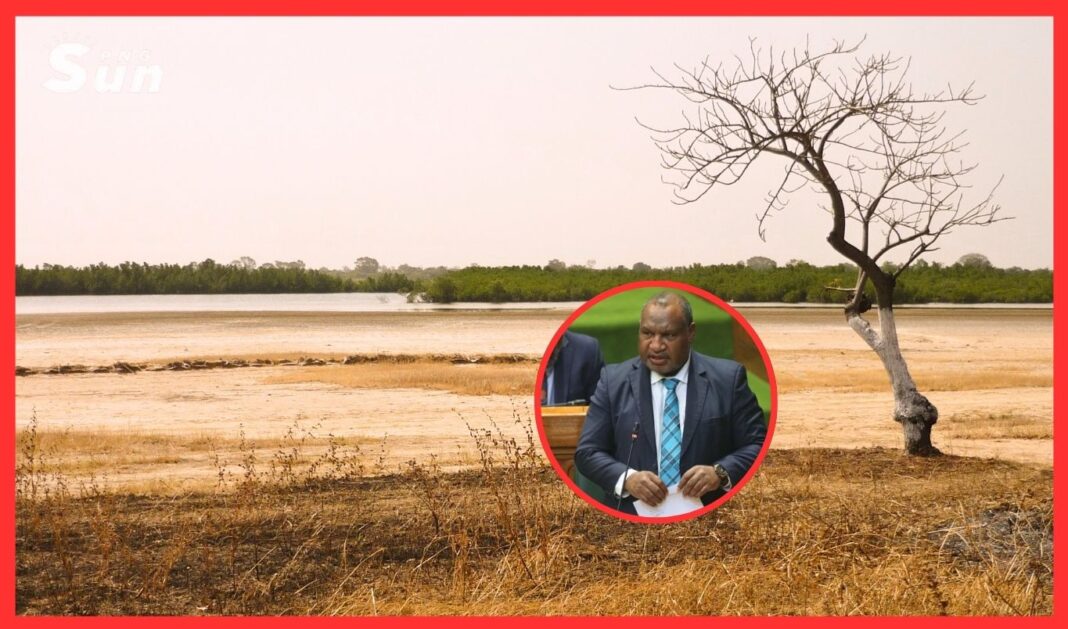

PNG Prime Minister James Marape has directed all provinces and districts across the country to begin immediate preparations for a possible prolonged dry season as developing El Niño conditions threaten below-normal rainfall and drought impacts across the country.
He made this statement as the debate on the dry weather continues.
The directive comes as the National Government moves to activate early preparedness measures aimed at reducing the impact on vulnerable communities, particularly those already facing water shortages and drought risks.
Related news: https://www.pmnec.gov.pg/prime-minister-marape-directs-nationwide-preparedness-as-el-nino-threatens-prolonged-dry-season/
Prime Minister Marape said Cabinet was reviewing financial and administrative arrangements to ensure provincial and district governments are supported to prepare for, mitigate and respond to disaster situations linked to prolonged dry conditions.
“I just want to pass instruction to all Districts and all Provinces to be prepared for an extraordinary Dry Season if it does happen,” Mr. Marape said.
He said existing national funding mechanisms would be adjusted where necessary to allow local governments to respond more effectively to emerging conditions.
The Prime Minister said while the National Government would continue monitoring climate developments and intervene where required, preparedness must begin at community, district and provincial levels.
“We are keeping tab on what is happening and, wherever possible, the National Government is intervening,” he said in a statement this morning.
“But in the meantime, we have asked Provinces and Districts to take ownership of this Disaster that may happen and have a localized approach.”
Mr. Marape said Papua New Guinea’s geography required tailored responses rather than a uniform national strategy, noting that communities near permanent water sources would face different challenges from isolated inland, island and high-altitude communities.
“Each area knows where water flows,” he said.
The Prime Minister has given the Central Government two weeks to produce a coordinated national preparedness and response strategy involving agencies responsible for weather and climate monitoring, disaster management, water supply, health, agriculture, transport, food security and provincial affairs.
He said immediate priorities include identifying vulnerable communities, mapping water sources, protecting community water systems, promoting water conservation, preparing agricultural contingency measures and strengthening local response capabilities.
El Niño is a climate pattern linked to warmer sea surface temperatures across the central and eastern tropical Pacific and is commonly associated with reduced rainfall in Papua New Guinea.
Previous El Niño periods have contributed to water shortages, crop failures, lower river flows, food insecurity, bushfire risks and frost in Highlands areas.
Current international and regional outlooks indicate a high likelihood that El Niño conditions will develop and persist through the second half of 2026, increasing the risk of drier-than-normal conditions across Papua New Guinea and parts of the Pacific.
Mr. Marape called on provincial leaders, district authorities, churches, community leaders, development partners and citizens to work together and begin preparations immediately.
“This is a time for preparedness, not panic,” he said.
“Every District and every Province must know its vulnerable areas, know its water sources, protect its people and prepare early.”
The Government is expected to provide further updates once the national strategy is completed and additional climate forecasts and advisories are released.