

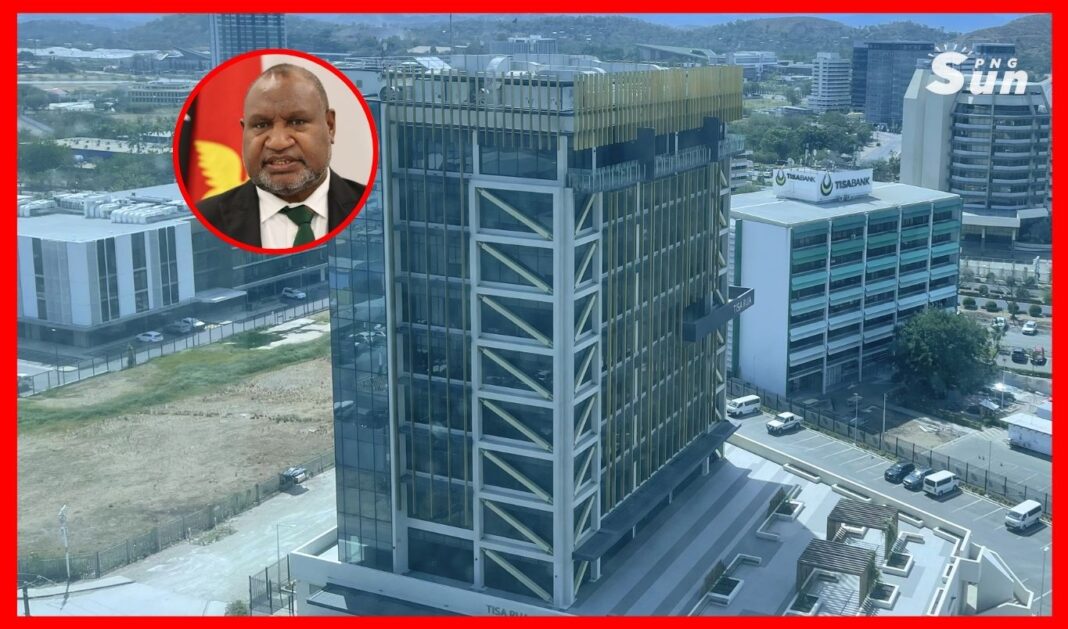

Prime Minister James Marape has welcomed a new Westpac economic report, saying it independently confirms Papua New Guinea’s economy remains resilient, is growing steadily and is positioned for stronger growth despite global economic challenges.
The report forecasts Papua New Guinea’s economy will grow by 4.6 per cent in 2026, following an estimated 5.5 per cent growth in 2025, with expansion driven by both the resource and non-resource sectors.
In a statement, Mr Marape said the findings showed the Government’s economic reforms since 2019 were delivering results.
“I urge all doomsayers and naysayers to check the statistics, study our historical economic data and compare Papua New Guinea’s performance with other economies in the region and around the world,” he said.
He noted that the projected 4.6 per cent growth was well above the World Bank’s global growth forecast of 2.5 per cent for 2026.
“When the global economy is projected to grow by only 2.5 per cent and Papua New Guinea is forecast by Westpac to grow by 4.6 per cent, fair-minded people must acknowledge that our country is performing comparatively well,” Mr Marape said.
The Prime Minister said growth was no longer being driven solely by the mining and petroleum sectors, with agriculture, industry, communications and services also making significant contributions.
He said the Government’s policy since 2019 had been to diversify the economy by expanding agriculture, fisheries, forestry, tourism, manufacturing and small business.
Mr Marape also welcomed Westpac’s assessment that foreign exchange availability had improved, saying reforms undertaken by the Government and the Bank of Papua New Guinea were easing one of the country’s biggest business constraints.
He said stronger export earnings from liquefied natural gas, gold, cocoa and coffee had also boosted foreign currency inflows and Government revenue.
The Prime Minister said inflation remained relatively contained at about 2.24 per cent during the March quarter, while the Government’s K1 billion fuel price stabilization program had helped shield households and businesses from rising international fuel costs.
Looking ahead, Mr. Marape said major projects such as the proposed US$14 billion Papua LNG Project, the Wafi-Golpu mine and the ongoing Connect PNG program would drive the next phase of economic growth.
He said his government would continue pursuing responsible fiscal management, attracting investment and expanding infrastructure while ensuring economic growth translated into more jobs, improved services and better living standards.
“As we move towards 2027, we will continue rebuilding the economy, supporting businesses, attracting investment and creating employment,” Mr. Marape said.
“Our people deserve an honest account of the economy. Challenges remain, but our country is resilient, our economy is growing and our future is promising.”