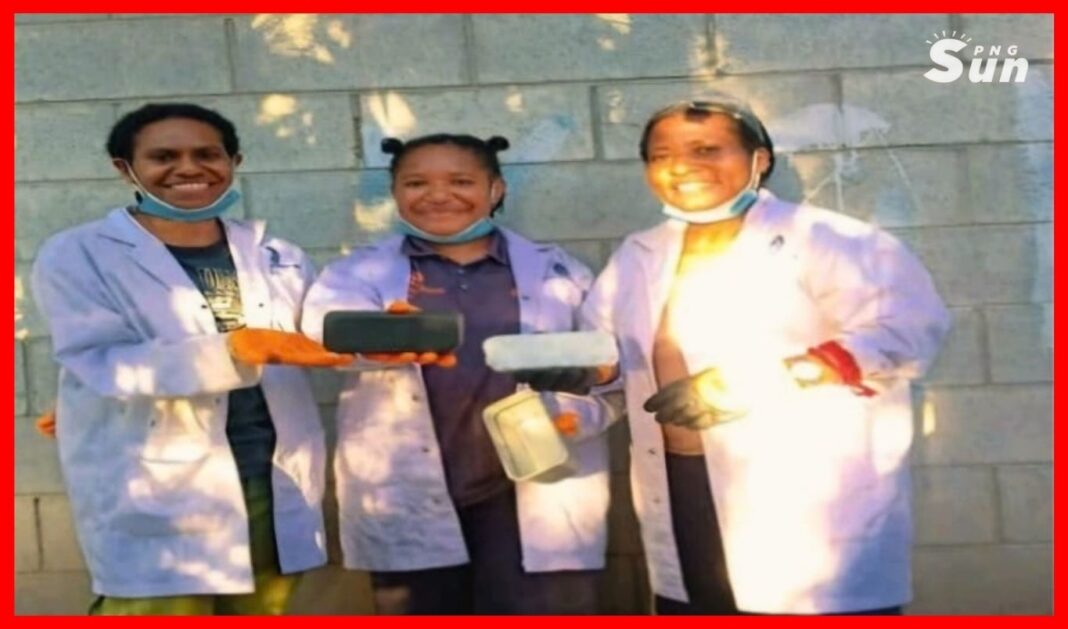

Five students attending UPNG’s School of Natural and Physical Science have turned discarded plastic sachets and bottles into durable pavers for pathways and flooring.
This project has earned them second place at a science fair. It is aimed at tackling plastic pollution in the country.
The students said they collected waste plastic, melted and compressed it, then mixed it with sand and aggregates to mold the material into pavers.
The group said they chose the project because large amounts of single-use plastic end up in waterways and landfills instead of being recycled.
“We wanted to find a practical way to reuse that waste rather than just talking about the problem, and pavers felt like something tangible we could actually build and show people,” the group said.
During trials, they found that different types of plastic behaved differently when heated, with some melting cleanly while others burned or released fumes.
This made proper sorting critical as the students experimented with different mixing ratios and cooling times to produce stronger pavers.
Their efforts earned second place at the science fair, an achievement they described as rewarding and motivating.
The team faced challenges in sourcing clean, sorted plastic and maintaining consistent heat during production.
Inconsistent heating affected how evenly the pavers set, while a limited budget and time restricted the amount of testing they could conduct.
The project cost more than K500, mainly for molds, heating equipment and aggregates, while the plastic was collected as waste.
Despite the challenges, the students said they were surprised by the strength of the final product.
“It really changed how we thought about plastic, not as garbage but as a usable raw material,” they said.
They encouraged other students to start their projects early and choose topics linked to real problems in their communities.
UPNG Science students turn plastic waste into bricks to tackle pollution