

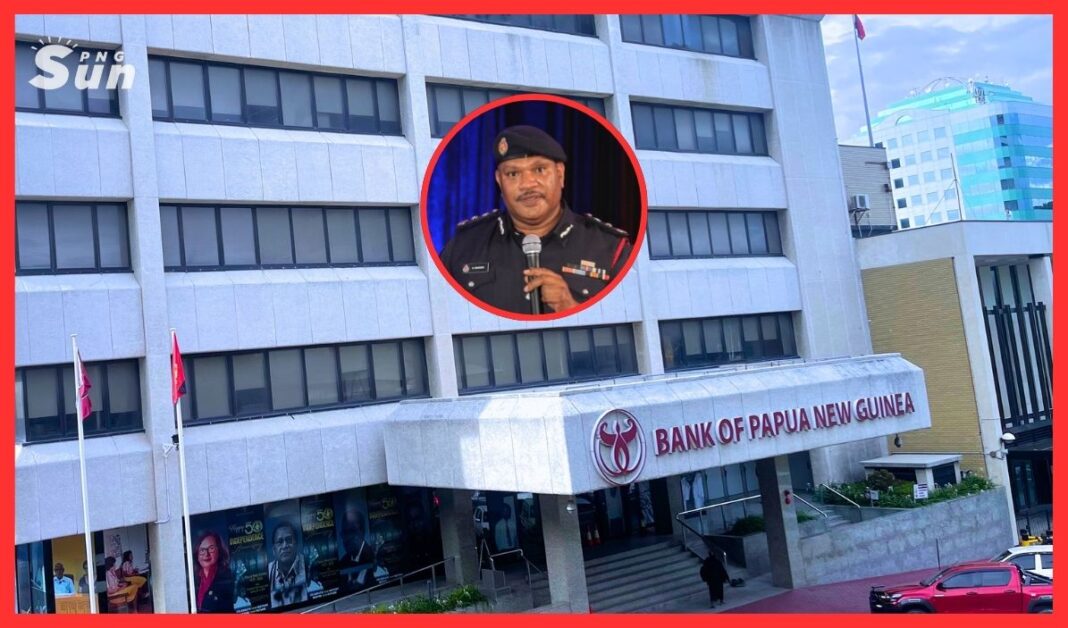

The Commissioner of Police, David Manning, has called on financial institutions to do their part in exposing the corrupt movement of money and to report suspicious activity to the Asset Restraint and Recovery Working Group (ARROW).
Speaking to executives from eight banks that operate in Papua New Guinea, Commissioner Manning said exiting the Financial Action Task Force (FATF) Greylist requires every bank and their staff to do their part in exposing corruption.
Related news: https://pnghausbung.com/police-urge-banks-to-report-suspicious-transactions/
“Now is not the time for the financial sector to sit back and let questionable transactions slide. If you see something suspicious, then you report it,” Commissioner Manning said to the bank executives.
“If a flagged transaction is found to be legitimate, then this is an effective financial system at work.
“But a failure to exercise effective scrutiny over banking business in a timely manner is a failure to meet legislated due diligence requirements.
“When we get transaction scrutiny right, we make a significant contribution to lifting PNG out of the greylist, and in doing so, strengthening the integrity of our financial systems.
“Working in partnership to ensure PNG’s financial system is robust and trustworthy is essential for our financial institutions.
“I call on our financial institutions to commit to being vigilant and proactive, and to share information promptly.
“The Prime Minister has been clear in his expectations that all Government Departments will work in partnership with the private sector, particularly financial institutions, to exit the greylist promptly and enable a stronger financial system for our communities.”
The Commissioner made the point that ARROW is a body making a critical contribution to lifting PNG out of grey listing, and proactive diligence by the financial sector is critical to that outcome.
“ARROW, with its founding members—the BPNG Financial Analysis & Supervision Unit, the Royal Papua New Guinea Constabulary, and the Office of the Public Prosecutor—are working hard to deliver positive results.
“Core to this is the assessment of contemporary Suspicious Matter Reports (SMRs) from the financial regulator and financial institutions. To be effective in identifying and targeting financial crime, these reports must be made urgently and without delay.
“If the intelligence raises reasonable suspicion of unexplained wealth and/or proceeds of crime, it is the role of ARROW to freeze associated bank accounts, restrain assets, confiscate those criminal proceeds, and return them to the people so they can be used for legitimate purposes.
“In order for ARROW to be most effective, we need reports on suspicious funds to be provided with unprecedented urgency.”
Commissioner Manning said law enforcement agencies are aware that a large proportion of SMRs are related to the misappropriation of government procurements.
“An SMR relating to suspected misappropriation using Bank of PNG cheques without sufficient supporting documents is a major contributing factor to money laundering in PNG. That is what the data has told us.
“For a resilient financial system that is hostile to money laundering, the financial sector must work collaboratively and proactively with law enforcement.
“Failure to follow legal process exposes a financial institution to liability for facilitating money laundering, and legal action will be taken if financial institutions fail to meet their legal obligations.
“We have seen that when financial institutions meet their obligations in a timely manner, ARROW will move to freeze and restrain suspected illicit funds.
“The country has already seen a significant increase in the freezing of illegal funds over the past six months, and this is clear evidence of how seriously we are taking this challenge.
“We need bank information quickly so that ARROW can use legislated tools to restrain and confiscate proceeds of crime before funds are siphoned off or transferred overseas.
“ARROW is working closely with stakeholders including Customs, IPA, IRC, Forestry, Fisheries, ICAC, and overseas law enforcement partners.”