
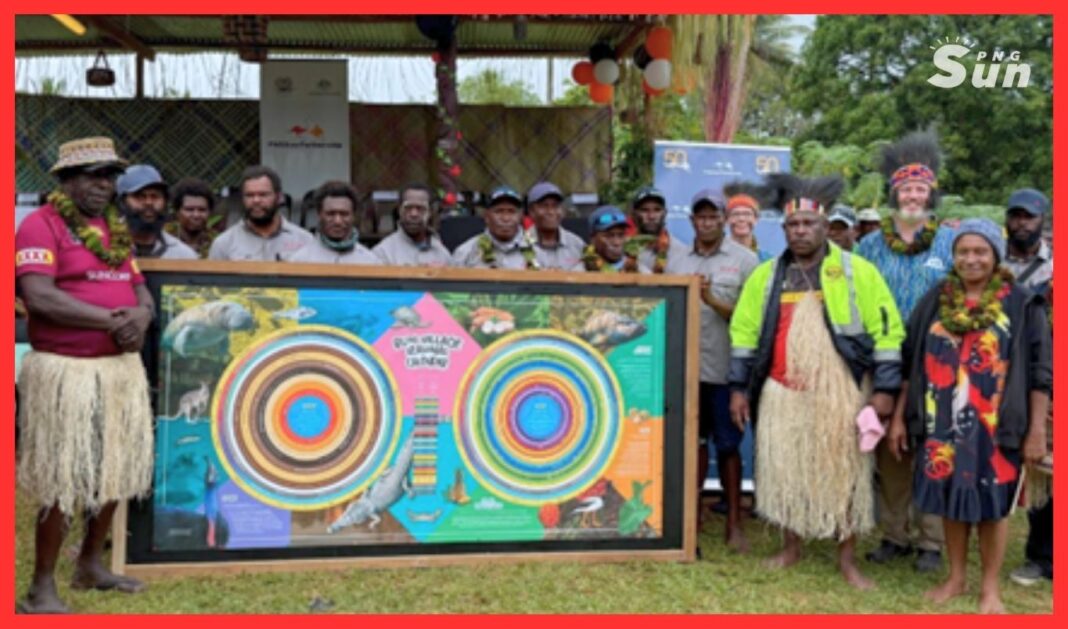

A community-developed seasonal calendar has been launched in Buzi Village in the Torres Strait area of South Fly District, Western Province, as residents respond to the growing impact of climate change on food supplies and natural resources.
The calendar was developed by South Fly Rangers in partnership with the Buzi community under the PNG-Australia partnership program.
Related news: https://www.postcourier.com.pg/buzi-village-launches-first-community-led-bilingual-seasonal-calendar-to-combat-climate-change/
It documents local seasons, weather patterns, and traditional knowledge relating to planting, fishing, harvesting, and the use of natural resources.
Community leaders say the calendar is intended to help villagers plan for changing weather conditions, food shortages, and environmental changes affecting daily life.
The bilingual Agob-English calendar is the first of its kind documented by the community and identifies important plant and animal species relied upon mainly for food and subsistence.
Former Ward Chairman Frank Warapa said climate change was already affecting farming, fishing, and coastal communities in the area.
“Climate change is very real here. It changes what we can plant, where we can fish, and how we protect our homes,” he said.
He said the calendar would help families prepare for seasonal changes and improve local planning.
Local leaders are also using the calendar to support disaster preparedness and discussions with provincial authorities and non-government organizations on climate adaptation and resource management.
The project draws on traditional ecological knowledge and ranger programs previously used in Indigenous communities in Australia.
Officials involved in the program say the initiative could help improve local-level planning and provide information on climate trends and food availability in remote communities across Western Province.
The South Fly Ranger Program continues to work with local communities and provincial authorities on conservation, resource management, and climate adaptation programs in remote parts of the province.