

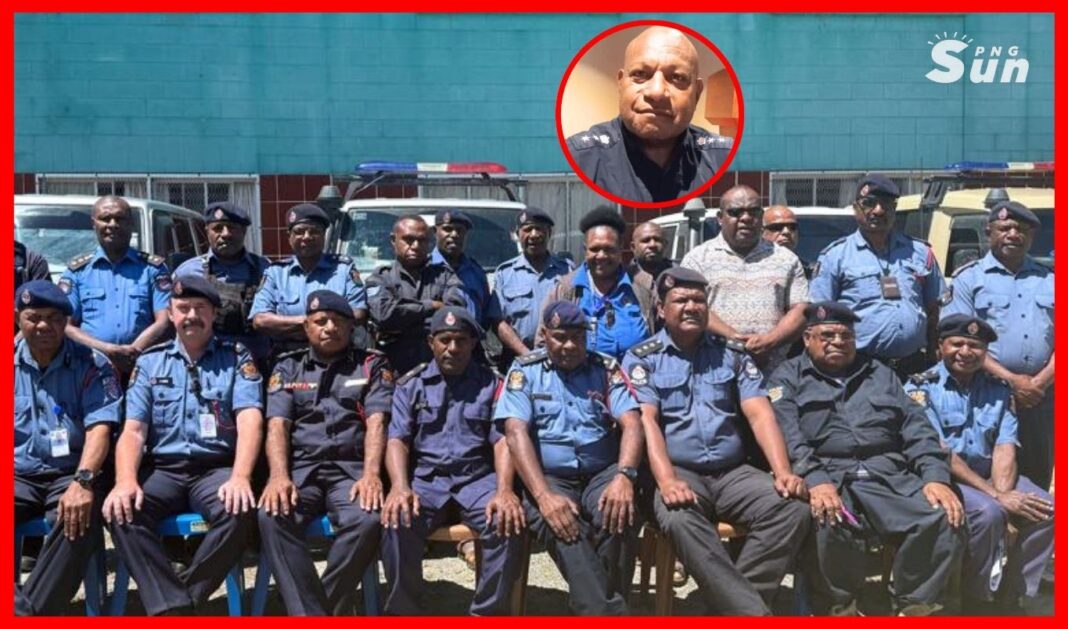

The Highlands Western Division of the Royal Papua New Guinea Constabulary has unveiled a two-phase strategic plan last week.
The strategy is aimed at protecting the 2027 National General Election across Hela, Southern Highlands and Enga, with a focus on securing voting spaces, protecting access to polling and containing the spread of small arms and light weapons.
Highlands Western Divisional Commander and acting Assistant Commissioner of Police (ACP) Joseph Tondop said the strategy was developed from operational experience, ground realities, available resources and the security needs of the Upper Highlands, covering the third and fourth quarters of 2026 and the first and second quarters of 2027.
The strategy, he said, is focused on three key areas: prevention of democratic subversion, protection of critical economic corridors and containment of small arms and light weapons (SALW) proliferation.
The expected outcomes are secured voting spaces, voting access, SALW mitigation, accountability for actions and restored public institutional trust.
ACP Tondop said in a statement that the strategy was centered on protecting the constitutional right to vote under Section 50 of the Constitution.
Following an analysis of resources, population, geography, capacity and capability with Provincial Police Commanders and Provincial Security Coordinators, ACP Tondop said the strategy was considered the most practical real-time approach for the division.
He said the plan was force-multiplier driven and would enhance security through community mobilization while addressing multiple threats at minimal cost.
One of the key measures is an Amalgamated Polling Booth Option, which would consolidate multiple polling points into fewer locations to concentrate security resources and reduce risks associated with polling.
The strategy will be built around awareness and education, civil society engagement, student leadership engagement, use of non-government organisations, centralization and action on intelligence, control of transport routes, and enhanced generation and utilization of police forces.
ACP Tondop identified political pressure and interference, SALW and ammunition supply, budgetary shocks and funding delays, and armed confrontations as the major risks and threats to the election security strategy.
He said implementation of the plan must begin in the third quarter of 2026 and would require support from stakeholders, including extractive resource developers, major businesses, international development partners, provincial administrations, district development authorities and national election funding.
He also called on communities across every local-level government and council ward to support the strategy.
ACP Tondop has also sought the support of tertiary students from the Upper Highlands studying across PNG to assist with voter education and awareness in their home provinces.
He said he would make a formal request through provincial education boards for students to support the Electoral Commission in delivering a free, fair and safe election.
“It is your country and your future. Have your say in ensuring that you get the leaders you want in a free, fair and safe manner by assisting us to educate and make awareness to our people so this election can set a benchmark for the future,” he said.
ACP Tondop said protecting voters’ ability to freely choose their leaders was a shared responsibility between police, communities and stakeholders.
“It is your future. We want you to have the leader you want. The leaders that you have chosen.
“We want to ensure that your ability to make that choice is protected so you can actually have your say. We have your backs here. Can you come on board and have our backs?
“We can only do it-TOGETHER!” he said.