


Prime Minister James Marape has called on the people of Mendi to take full ownership of their town and lead a grassroots clean-up and behavioral reset, saying the future of Southern Highlands’ capital now depends as much on community discipline as on government investment.
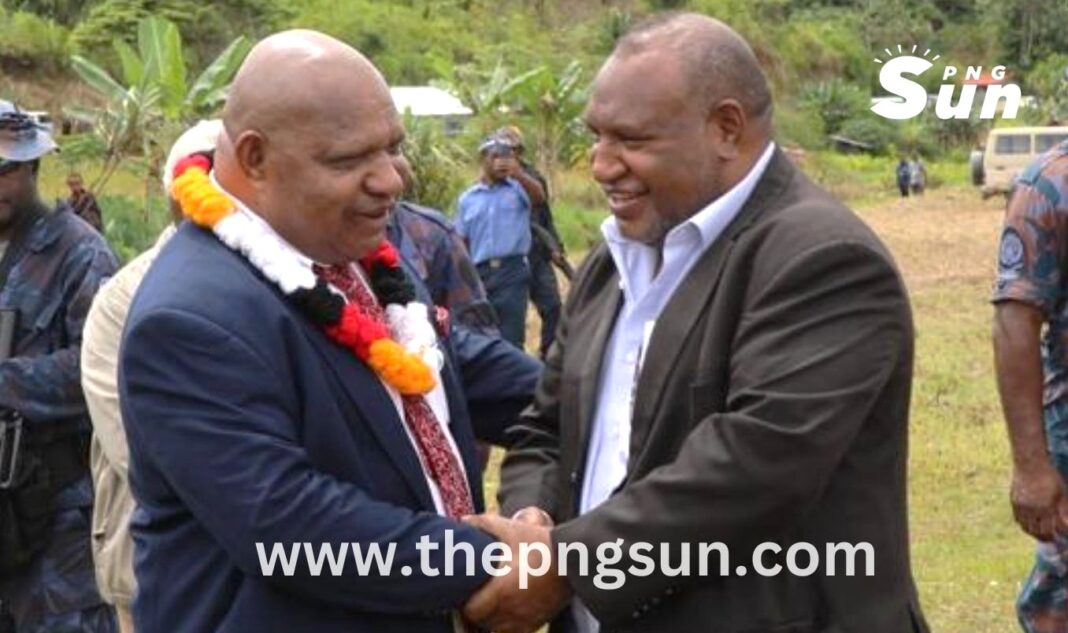
Speaking to villagers at Tubiri village this week, Prime Minister Marape told elders, youth leaders, churches and ward councilors that Mendi must move away from neglect, disorder and fear and become a town that reflects pride, unity and national purpose — especially as it prepares to host the 2026 PNG Games and major new infrastructure.
“This year is about cleaning up Mendi,” he said. “Not just government cleaning it — you, the people, must clean it. Look after your town.”
He warned that roads, buildings, sporting facilities and schools being built with public money would mean nothing if communities continued to vandalize, neglect or abuse their own town.
“You cannot ask for development and at the same time destroy your own town,” Prime Minister Marape said. “Mendi belongs to you. If you protect it, it will grow. If you destroy it, you destroy your own future.”
Prime Minister Marape said the National Government deliberately selected Mendi as the key host center for the 2026 PNG Games as part of a national strategy to transform towns that had previously struggled with law and order into centers of pride and progress.
He confirmed that K30 million had already been allocated last year, with more funding to follow through tax credit schemes and national government programmes, including road upgrades in and around Mendi town, sporting facilities for the PNG Games, and improvements to schools and health-training infrastructure, including nursing education.
“Mendi will now receive people from all 21 provinces and Bougainville,” he said. “You will host the nation. That is why this town must be clean, safe and respected.”
While outlining government spending, Prime Minister Marape made it clear that money alone would not fix Mendi’s problems.
He called on churches, village leaders and youth groups to lead organized clean-ups, protect public facilities and stop destructive behavior, including vandalism, alcohol abuse and drug use.
“Pastors, councilors and elders must stand up,” he said. “Character matters. Discipline matters. If our young people behave well, this town will change.”
He challenged youth groups to become “defenders of Mendi” rather than participants in crime and disorder.
“Your future is here. Don’t burn it down,” he said.
The Prime Minister told the crowd that leadership must always return to its roots, describing Tubiri and Mendi as his home base.
“Home is where the heart is,” he said. “No matter where leadership takes us, we must always come back to where we started.”
He thanked the community for their loyalty, prayers and support over the years, saying relationships and unity were more important than money or politics.
“Money is not important. People are important,” he said. “When we break relationships, we break our future.”
Prime Minister Marape linked the clean-up of Mendi to a wider push to give young people a future through education and work.
He said more than 100,000 young Papua New Guineans had returned to school over the past six years through second-chance and re-enrolment programmes.
“No child from Mendi should lose hope,” he said. “Whether you stopped at Grade 8, 10 or 12, there must be a way back.”
He encouraged families, churches and community leaders to identify young people who had dropped out of school and help them return to education or training.
Prime Minister Marape also highlighted growing opportunities under Australia’s labor mobility programmes, noting that between 6,000 and 7,000 Papua New Guineans are currently working in Australia.
He said young people from Mendi could benefit if they stayed disciplined and built good character.
“Pastors are important because character matters,” he said, explaining that church references and behavior are key requirements for overseas work.
Prime Minister Marape told the people of Tubiri that he would return later in the year to inspect infrastructure works — and to see whether the people had honored their responsibility to clean up and protect their town.
“This is a test for Mendi,” he said. “Government is doing its part. Now you must do yours.”
He said if the community worked together, Mendi could once again become a proud, safe and respected town.
“Let us reset Mendi together-with peace, education, discipline and hard work,” he said.