

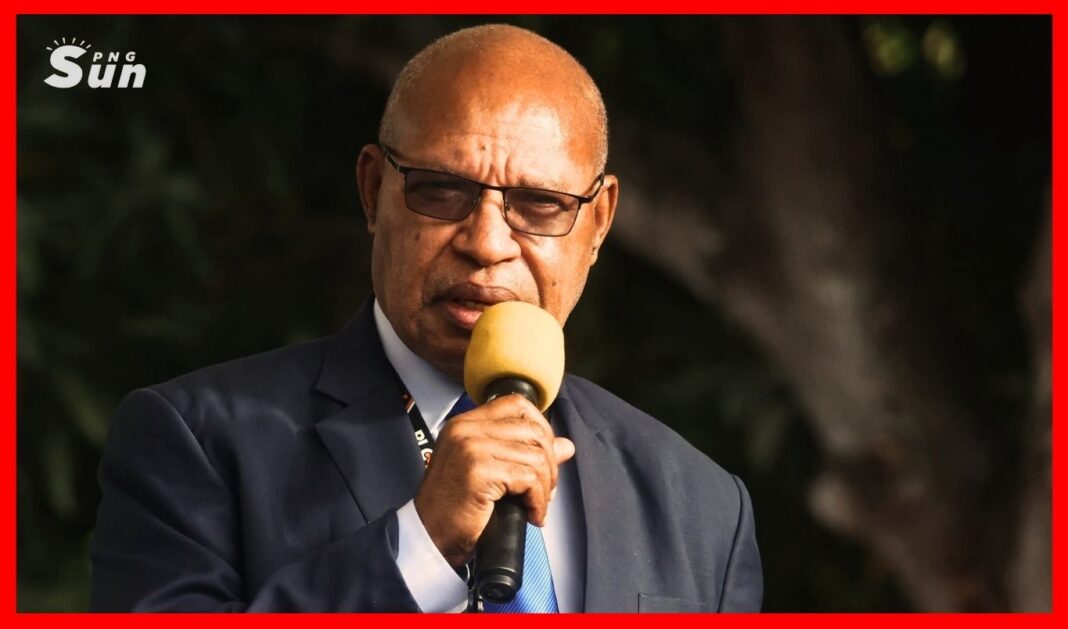

The Minister responsible for PNG Power Limited (PPL), Richard Maru, says he is “horrified” by the state of the state-owned power utility after spending a week in the portfolio, describing the company as insolvent, loss-making and struggling under mounting debt.
Mr. Maru in a statement said the company’s financial problems had resulted in continued load shedding, blackouts, some of the world’s highest electricity tariffs, and losses of more than 25 percent of electricity sales through technical losses and theft.
He said PPL was “bleeding” financially for several reasons, including loss-making Power Purchase Agreements (PPAs) with Independent Power Producers (IPPs), annual losses from “C” Centres, high debt levels, insufficient power generation, technical losses and theft, and rising operational costs.
According to PPL management information, the utility is losing money every day from its PPAs with IPPs, particularly Munum Power and Dirio, because the retail tariff charged to customers of between K0.76 and K1.00 per kilowatt-hour (kWh) is lower than the price PPL pays to purchase electricity.
He said 2025 electricity generation costs showed Munum Power, formerly POSCO, generated diesel power at K2.76 per kWh, resulting in a negative 200 percent margin; Dirio’s gas-powered electricity cost K1.14 per kWh, resulting in a negative 25 percent margin; while NiuPower’s gas-generated electricity cost K0.73 per kWh, giving PPL a positive 20 percent margin.
Mr. Maru said he had assembled lawyers to investigate whether the PPAs with the IPPs were illegal or fraudulent.
“I want to know how we entered into agreements that we knew we would be losing money from. Even the simple betelnut seller knows more than those who made the deal and entered into these loss-making PPAs. It is basic common sense: you cannot buy a betelnut for K1 and sell it for less than that. This is fraud,” he said.
He said the Government would trace those responsible for entering into the agreements.
“I am not against IPPs but against the PPAs that have resulted in PPL losing money from the beginning and contributing directly to its insolvency. If we have to take these agreements to court and nullify them, we will,” he said.
Mr Maru said PPL was also losing about K80 million annually from its “C” Centres, had loans exceeding K2.3 billion as of June 2026, owed more than K1.2 billion to IPPs and other creditors, was unable to generate enough power in centres such as Lae, was losing more than 25 percent of electricity through technical losses and theft, and faced high and increasing operational costs.
“This is the extent of the mess we are in,” he said.
Mr. Maru said many parties were responsible for PPL’s current state, including political leaders who approved the loss-making PPAs with Munum Power and Dirio, the board, management and staff for excessive cost overruns and payroll increases, and the Government for delaying the sale of the “C” Centres to provincial governments and their private sector partners.
He said he had already taken several actions following his appointment.
These include supporting PPL’s decision to appeal the recent National Court ruling requiring payment of debts owed to Dirio, engaging lawyers and forensic accountants to review the PPAs with Munum Power and Dirio and seek court action to nullify agreements found to be fraudulent or unfair under the Fairness of Transactions Act, directing PPL to prioritize solar power projects at Wawin and Yalu in Morobe Province to generate 35 megawatts of electricity in Lae within five months, and preparing a Cabinet submission proposing measures to settle PPL’s debts, remove the company from insolvency, sell the “C” Centers, and partially privatize the profitable Port Moresby, Ramu and Gazelle grids through investments by the private sector, superannuation funds and landowner companies.
Mr. Maru assured Papua New Guineans that major reforms were coming.
“I want to assure the people of PNG that PPL is in for the biggest shake-up. It will not continue to operate as it is. ”
Related news: https://www.thepngsun.com/minister-maru-plans-png-power-reform-agenda-and-salvage-cash-strapped-soe-ppl/
“I cannot sit and watch PPL go down. It is the pride of our nation and our iconic company owned by the 10 million people of PNG.”
“I am not going to let the Prime Minister down, who trusted me to fix this mess,” he said.