

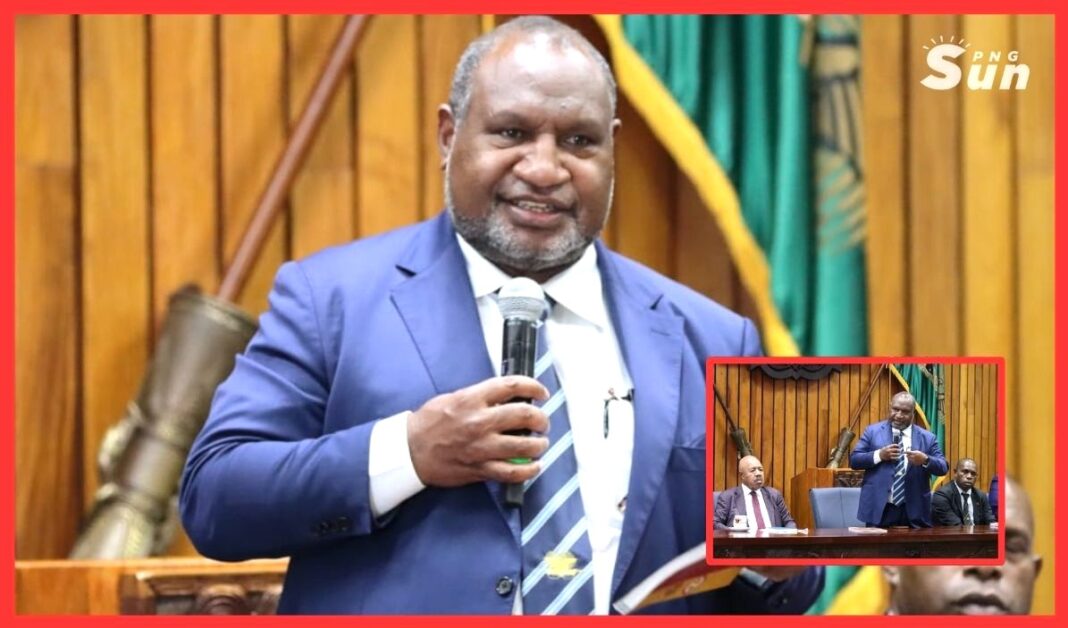

Prime Minister, James Marape has announced his intention to pursue legislation that will outlaw polygamy in Papua New Guinea in the future, describing the move as part of a broader national effort to protect women, strengthen families, and restore respect for mothers and daughters across the country.
Speaking in Parliament during discussions on gender-based violence and women’s issues, Prime Minister Marape said the government is considering a policy proposal that would see new laws introduced to end the practice of polygamy going forward.
Related news: https://www.postcourier.com.pg/marape-proposes-future-law-to-outlaw-polygamy/
The Prime Minister emphasized that while Papua New Guinea’s rich cultural traditions must be respected, certain practices that undermine the dignity and security of women must be addressed through national reform.
“Some good aspects of our culture must be preserved, but other practices that harm our families must be left behind,” Prime Minister Marape said in a statement.
“Polygamy is one such issue that has contributed to many broken homes, children being left without proper support, and women being treated unfairly.”
Prime Minister Marape said he intends to present a policy paper to the National Executive Council to begin the process of introducing legislation that would outlaw polygamy in the future, with the proposed law expected to take effect from around 2030 onward.
Under the proposed approach, existing arrangements would not be automatically invalidated, but the law would prohibit new polygamous arrangements in the future.
“This is a reform that we must consider carefully, but it is necessary if we are to protect the mothers and daughters of our country,” he said.
“The law we propose will ensure that going forward, polygamy will no longer be practiced in our country.”
The Prime Minister said the proposal reflects the government’s commitment to addressing deeper social causes of gender-based violence and inequality.
He emphasized that women must no longer be viewed as property or commodities within society.
“A woman must no longer be seen as an asset or something that can be acquired from time to time,” Prime Minister Marape said.
“Women are equal partners in our families and our communities. God created them equal, and they must be treated with dignity and respect.”
Prime Minister Marape noted that the proposed law would also reinforce protections for women within families, particularly in ensuring that wives and children are not abandoned or left without proper support.
“Men who walk away from their responsibilities leave behind women and children who suffer the consequences,” he said.
“Our laws must ensure that women and children are protected and that family responsibilities are respected.”
The Prime Minister said the government will continue consulting widely with communities, churches, legal experts, and cultural leaders as discussions on the proposed reform progress.
He stressed that the aim is not to undermine Papua New Guinea’s traditions but to ensure that national laws reflect modern values of equality, justice, and family stability.
“Papua New Guinea must move forward as a country that respects and protects its women,” Prime Minister Marape said.
“This reform is about safeguarding the future of our families and ensuring that our daughters grow up in a society where they are valued and respected.”
Prime Minister Marape reaffirmed that his government remains committed to strengthening laws and national policies aimed at protecting women and addressing gender-based violence.
He said reforms addressing harmful practices must go hand in hand with broader national efforts to promote stronger families, responsible fatherhood, and respect for women.
“As we look to the future of our nation, we must ensure that our mothers and daughters are safe, respected, and valued,” he said.
Related news: https://www.thepngsun.com/pm-marape-calls-for-stronger-family-values-and-national-effort-to-end-violence-against-women/
“That is the kind of country we must build for the next generation of Papua New Guineans.”