

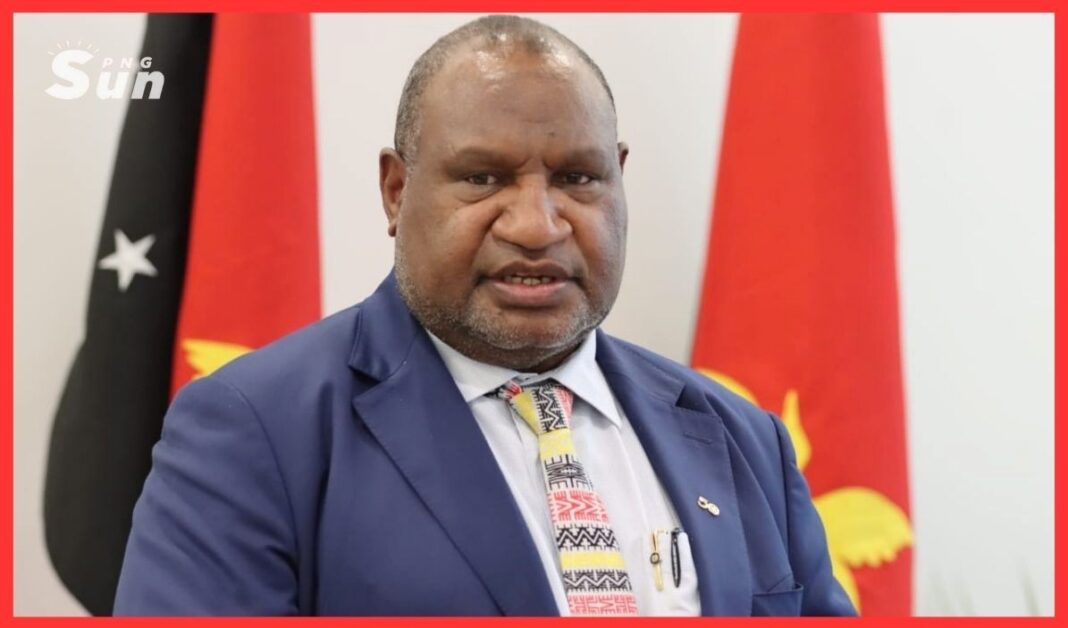

The Government of Papua New Guinea is closely monitoring developments arising from the escalating conflict involving Iran, Israel and the United States, with particular attention on its potential impact on global prices and the domestic economy.
In a statement today, Prime Minister, James Marape said the Government recognizes that rising global oil prices could lead to imported inflation, especially in fuel and essential goods that the country relies on from overseas.
Related news: https://www.postcourier.com.pg/pm-marape-in-a-troubled-world-papua-new-guineas-unity-is-our-greatest-strength/
“We are watching this situation very, very closely,” the Prime Minister said.
“If fuel prices go beyond certain levels, or if food prices rise sharply due to imported inflation, the Government will intervene to assist the economy and protect our people.”
He said global oil markets remain vulnerable, noting that any disruption to key international shipping routes—through which an estimated 20 to 30 per cent of the world’s oil supply passes—could place upward pressure on fuel prices worldwide.
“If fuel prices rise to extraordinary levels, my government stands ready to intervene and subsidize fuel prices to protect our economy and our people, “Prime Minister Marape said.
“Fuel is a critical input across the economy, and we will not allow unchecked increases to destabilize households, businesses or essential services.”
Prime Minister Marape said the Government has proven experience in managing external economic shocks, pointing to interventions implemented during the COVID-19 period.
“During COVID-19, we successfully subsidized food supply chains, including shipping food from Lae to Port Moresby and transporting produce such as sweet potato from the Highlands to Lae,” he said.
“Those measures helped stabilize prices and ensured food continued to reach our people during a very difficult global period.”
He confirmed that the Government stands ready to again provide targeted subsidies, particularly on fuel, should verified inflationary pressures threaten affordability or broader economic stability.
The Prime Minister also noted that the Government has already subsidized 13 essential household items, a measure that continues to support families across the country.
At the same time, Prime Minister Marape stressed that long-term economic resilience depends on strengthening domestic food production and reducing reliance on imports.
“In times like this, I strongly encourage Papua New Guineans to buy from local producers,” he said. “We have enough food in our country. We do not need to be pressured into consuming imported food as our primary staple.”
He encouraged greater consumption of locally grown foods such as sweet potato, taro, yam, banana, cassava and sago, describing them as healthier, more affordable and more sustainable.
The Prime Minister also highlighted local rice production as an emerging opportunity, noting that rice is now being produced in areas such as Rigo, alongside other local producers.
“We will continue to support local food production, including rice and other staples,” he said. “This reduces import costs, strengthens food security, and keeps money circulating within our own economy.”
Prime Minister Marape further pointed to improved road connectivity linking food-producing regions to Port Moresby and other urban centers as a key enabler of domestic food distribution and national food security.
“Our rural areas and islands are rich in fertile soil,” he said. “We can produce our own food. Buying local supports our farmers, strengthens our economy, and protects us during global disruptions.”
Prime Minister Marape assured the nation that should the global conflict escalate further and inflationary pressures increase; the Government will implement additional measures to help the country navigate what he described as a potentially stressful global economic phase.