

National Capital District Governor Powes Parkop has called for major reforms to Papua New Guinea’s political system, questioning whether members of Parliament should continue to hold the power to elect the Prime Minister.
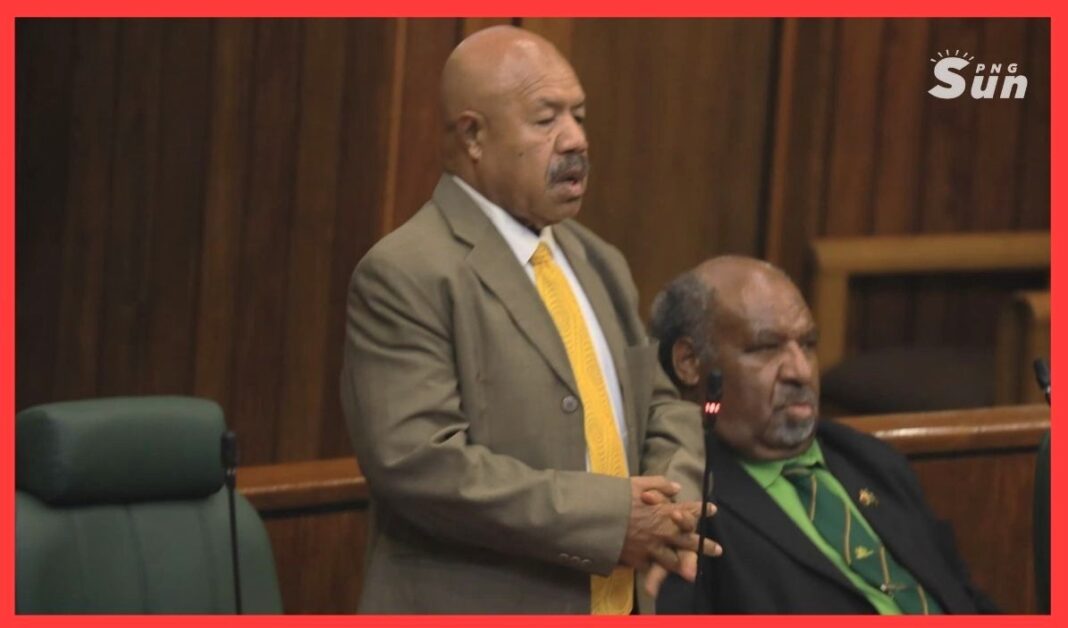
Speaking during a parliamentary debate on constitutional reform whether or not for the citizens to elect the country’s Prime Minister yesterday, Governor Parkop said Papua New Guinea must seriously examine its system of government after 50 years of independence.
Related news: https://www.postcourier.com.pg/people-to-vote-pm/
He warned that the country’s political structure has created instability and forced national leaders to focus more on political survival than on governing the nation.
Governor Parkop said that while the country’s founding leaders designed the system through the Constitutional Planning Committee (CPC) in 1974, the system must now be reassessed based on five decades of experience.
“We have the benefit of hindsight,” Parkop told Parliament.
“The leaders and experts of that time made decisions based on the understanding and the world of 1974. But here we are, 50 years on.”
Governor Parkop argued that key aspects of the current parliamentary system, particularly the constant threat of votes of no-confidence has undermined stability in government.
He said prime ministers since independence in 1975 have been forced to spend much of their time maintaining parliamentary numbers rather than focusing on national development.
“The first and foremost occupation is the numbers game,” he said.
According to Parkop, the lack of security of tenure for the country’s chief executive officer (PM) makes it extremely difficult for any prime minister to implement major reforms.
“How are you going to govern and make very important decisions when the Prime Minister has no security of tenure?” he asked.
One of the strongest points raised by Parkop was that the authority to elect the prime minister ultimately belongs to the people of Papua New Guinea, not to members of Parliament.
He said MPs were only given that authority because citizens can not directly participate in parliamentary proceedings.
“The power to elect the Prime Minister of Papua New Guinea belongs to our people,” he told Parliament.
After 50 years, he said Parliament must ask whether it has exercised that authority responsibly on behalf of citizens.
Mr. Parkop said options presented under the current constitutional reform process include the possibility of returning the power to elect the country’s chief executive officer directly to the people.
If MPs continue to use the power for political bargaining rather than in the national interest, he said, they risk losing the moral authority to retain it.
“If we don’t use this power properly, then give it back to our people,” Parkop said.
“And if they make bad decisions, they live with it because it is their power.”
Mr. Parkop also criticized what he described as a lack of trust among leaders in the ability of ordinary Papua New Guineans to make decisions.
He said citizens have demonstrated their capability in many ways and should be given greater confidence and responsibility.
To illustrate his point, he referred to development taking place on customary land in areas such as Taurama Valley and Taurama Beach in Port Moresby, where residents have built homes despite limited infrastructure.
“If we trust our people, they will build this city of ours,” Mr. Parkop said.
Mr. Parkop said Papua New Guinea’s leaders must honestly reflect on the country’s political system as it approaches its 50th anniversary of independence.
While members of Parliament enjoy secure five-year terms, he said, the prime minister who is responsible for leading the country does not have the same stability.
He warned that without structural reform; political instability would continue to undermine national leadership and development.
Related news: https://www.thepngsun.com/pm-marape-urges-thoughtful-debate-on-pm-election-by-people-other-proposals/
“We cannot continue doing the same thing and expect different results,” he said.