


The Cocoa Board of Papua New Guinea (CBPNG) has launched a nationwide training program aimed at strengthening extension services and improving support for cocoa farmers across the country.
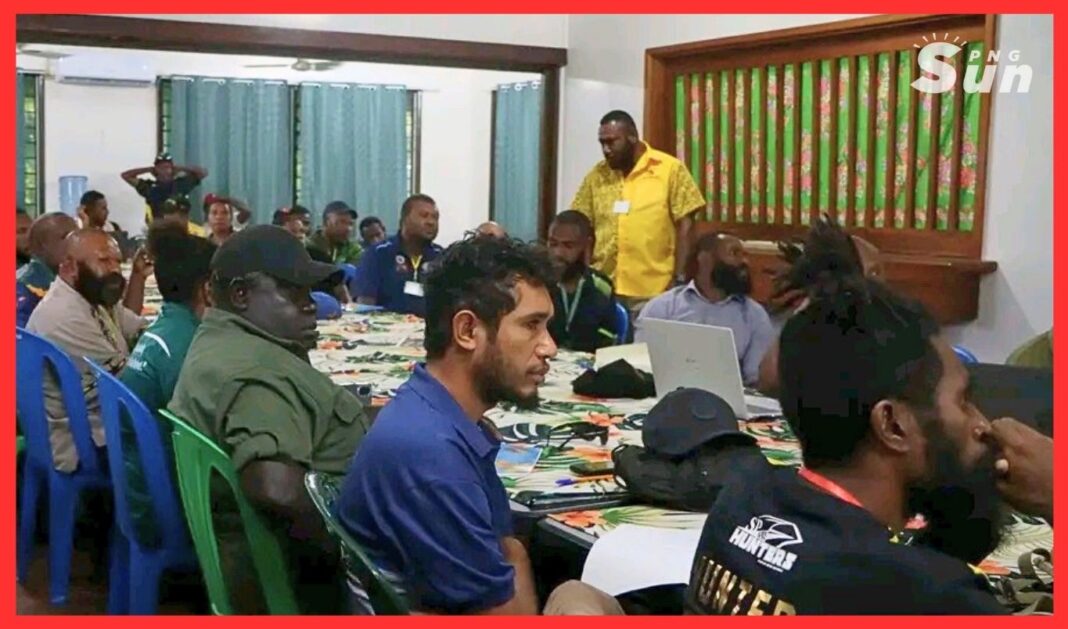
The two-week Training of Trainers (TOT) workshop, underway at the Tavilo Cocoa Board Research Station in East New Britain from June 8 to 19, brings together Extension and Field Services Officers under the PNG Agriculture Commercialization and Diversification Development (PACD) Cocoa Project’s institutional strengthening component.
Held under the theme “Empowering Officers to Deliver Quality Cocoa Extension Service to Farmers,” the program is focused on equipping officers with practical skills and technical expertise to improve productivity and service delivery throughout cocoa-growing communities.
Speaking during the official opening on Tuesday, Cocoa Board Chief Executive Officer Jess Tukup Anjen emphasized the important role extension officers play in supporting growth across the industry.
“You are the face of the Cocoa Board in everyday operations. What you do speaks volumes about how we improve production and the quality of cocoa for our farmers,” he said.
Mr. Anjen said the training is designed to strengthen officers’ capabilities across the entire cocoa value chain, from farm establishment and production through to post-harvest processing. He said extension services must continue evolving to respond to changing industry demands and opportunities in international markets.
Participants are engaging directly with cocoa scientists and industry specialists, receiving training on climate change mitigation, compliance with the European Union Deforestation Regulation (EUDR), and strategies to improve farmer adoption of new technologies.
The first week of the workshop has focused on theory, discussions, and group activities covering the CBPNG Strategic and Corporate Plan, cocoa research and development, plant breeding, climate-smart agronomy, pest and disease management, entomology, post-harvest value addition, cocoa regulation, compliance requirements, grading systems for premium markets, and cocoa production economics.
During the second week, officers will undertake practical field training under facilitator supervision at Tavilo Research Station, applying lessons in operational environments including budwood gardens and cocoa nurseries.
Mr. Anjen said the Board is also pursuing broader reforms to strengthen extension services nationwide as cocoa production expands into the Highlands and Southern regions.
“We are repositioning and fixing key systems within the industry. This training is part of a larger effort to ensure we are well-prepared to meet increasing demand and take advantage of rising global cocoa prices,” he said.
Research and Extension Development Services (REDS) Executive Manager David Yinil said the initiative aligns with the Cocoa Board Corporate Plan 2026–2028 and supports development of the Cocoa Industry Strategic Plan 2026–2035, which is linked to national agriculture and development priorities.
Mr Yinil said the training will improve officers’ capacity to guide farmers in establishing new cocoa blocks, rehabilitating ageing plantations, maintaining farms, implementing integrated pest and disease management (IPDM), adopting diversified farming systems, and improving harvesting, fermentation, drying, and other post-harvest practices.
Participants described the workshop as a valuable opportunity to exchange knowledge and gain practical insights from researchers and industry leaders.
The training marks another step toward building a stronger extension workforce to support farmers, increase productivity, and improve the long-term competitiveness of Papua New Guinea’s cocoa industry.