

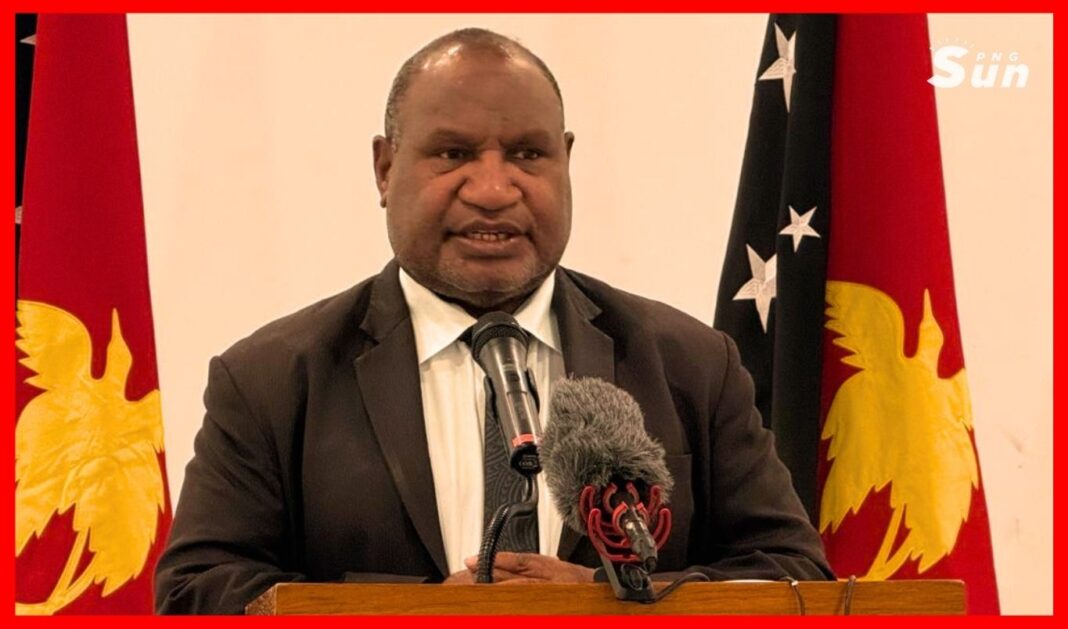

More than 70 heads of public sector institutions have been suspended after the National Executive Council approved action against officials who failed to submit mandatory annual reports, PM Marape announced last week.
The suspensions, approved by Cabinet on July 22, affect departmental and agency heads, provincial administrators, Provincial Health Authority chief executive officers, university heads, State-owned Enterprise chief executives, leaders of the disciplined forces and heads of constitutional offices who failed to meet statutory reporting requirements.
PM Marape in a statement said the decision took immediate effect and applied equally to every affected officer.
“This decision is non-discriminatory. It does not matter who you are or what position you hold. “
“If your name appears on the list of non-compliant agency heads circulated last week, your suspension takes immediate effect,” he said.
He said the Government’s compliance review found many agency heads had failed to submit annual reports by the March 31 deadline and other required reports due by June 30.
The review covered the 2023, 2024 and 2025 reporting periods and found some officials had repeatedly failed to meet their legal obligations.
“Some of these officers are serial offenders. Some have habitually failed to report on the funds entrusted to them and the administration of their respective organizations,” PM Marape said.
He said agency heads, as Section 32 officers, were legally responsible for reporting on public funds under their control and the performance of their organisations.
PM Marape said annual reporting was a cornerstone of good governance because the reports are consolidated by the National Government, considered by Cabinet and tabled in Parliament.
He said the reports also form the basis for annual work plans and budget funding requests.
“Accountability, transparency and proper reporting are not optional—they are fundamental responsibilities of public sector leadership,” he said.
The Prime Minister said the suspensions formed part of the Government’s 2026 “Year of Reset” agenda to strengthen discipline and accountability across the Public Service.
He said he had directed the Chief Secretary to work with the Department of Personnel Management to immediately implement the Cabinet decision, appoint acting heads where necessary and investigate each affected officer.
The investigations will determine whether officers breached the conditions of their employment contracts and whether disciplinary action, including dismissal, is warranted.
PM Marape said officers with genuine reasons for failing to submit reports would have the opportunity to explain their circumstances during the suspension period.
“If it is not the head of the organisation, but finance managers, human resource managers or other officers who have failed to perform their responsibilities, then those responsible will also be held accountable,” he said.
He expressed concern that some universities, provincial administrations and Provincial Health Authorities had become repeat offenders.
PM Marape said this was the first time during his seven years in office that such broad action had been taken against non-compliant agency heads.
“Better late than never,” he said.
“We have had enough of people failing to report on the work entrusted to them. That culture must end.”
He said all public sector leaders must account for the resources entrusted to them as Papua New Guinea prepares to enter its 51st year of Independence.
“Leadership is not only about exercising authority; it is about accounting for the resources entrusted to you and the results you deliver,” PM Marape said.