


Papua New Guinea’s heavy reliance on imported cement is exposing vulnerabilities in the construction supply chain, with reports of limited availability in Port Moresby highlighting the risks of disruptions to essential building materials.
A PNG SUN report on June 1 found limited cement stocks at major hardware and crushing sites in Port Moresby.
One crushing site along the Hiritano Highway reportedly had no Longfa cement available, while a salesperson at a major hardware outlet said stocks were expected to be replenished the following week.
Customers at the outlet were also reportedly restricted to purchasing 20 bags each.
The reports point to a local supply constraint, although they do not establish that all hardware suppliers in Port Moresby had exhausted their cement stocks.
The situation nevertheless highlights the importance of a reliable cement supply to contractors, developers and households, particularly for projects operating under fixed budgets and construction schedules.
The PNG Government said in March that the country currently imports nearly all of its cement and quicklime requirements.
Government figures cited by PNG Business News show PNG imported about US$14.3 million worth of cement in 2024, together with about US$7.88 million worth of cement clinker.
That dependence leaves domestic construction costs and supply exposed to international shipping, foreign exchange, logistics and production conditions outside PNG.
Any disruption along those chains can affect the availability and cost of cement in the domestic market.
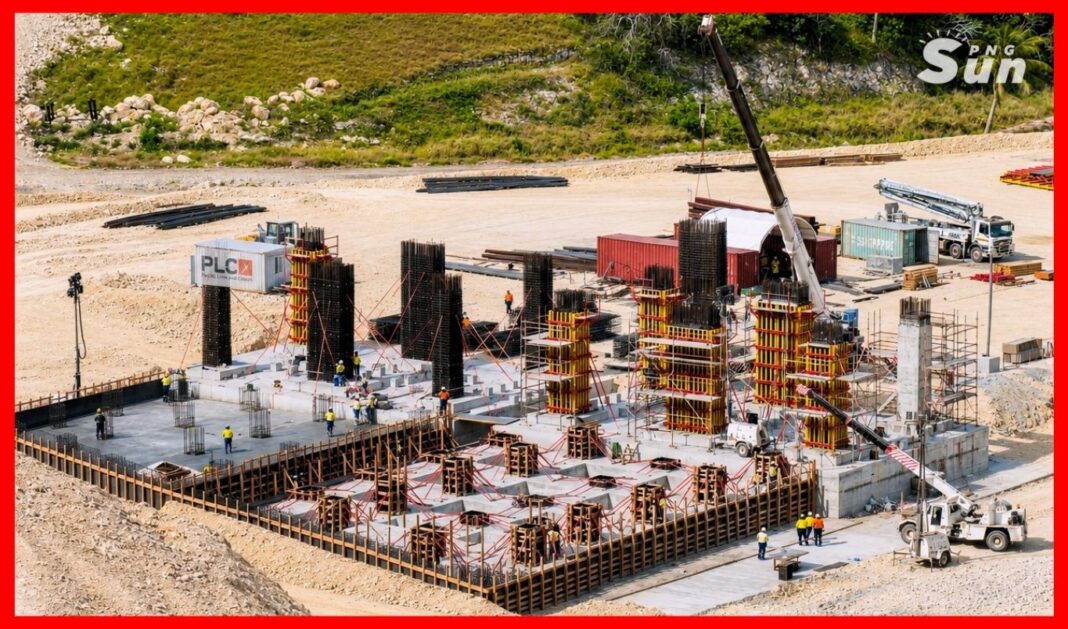
The supply concerns come as PNG moves to expand domestic cement and lime production through the Central Lime and Cement Project in Central Province.
The project, located at Kido and Rea Rea, received its Project Development Agreement in March 2026.
The integrated facility is planned to produce quicklime, clinker and cement for domestic and export markets.
According to the Government, Stage One, including quicklime kilns, a quarry, wharf and supporting infrastructure, is already under development, with major quicklime production targeted for 2027.
Stage Two will involve construction of the clinker and cement manufacturing facility.
The project has been positioned as an import-substitution initiative aimed at strengthening domestic manufacturing and reducing PNG’s exposure to imported cement.
PNG already has domestic cement-processing capacity.
PNG-Halla Cement in Lae produces Portland cement using imported clinker and gypsum and has reported grinding capacity of 200,000 tonnes a year.
The company says about 80 per cent of its production is sold domestically.
PNG Taiheiyo Cement also distributes cement to customers in Lae and Port Moresby, underscoring the importance of transport and distribution networks in moving cement from production facilities to major markets.
The Australia Papua New Guinea Business Council has also identified reliable domestic supplies of cement and related materials as important to cost efficiency and the timely delivery of public and private-sector projects.
The recent Port Moresby reports therefore raise a broader issue for PNG’s construction-driven economy.
Domestic production capacity alone will not guarantee supply resilience.
Manufacturing, transport, storage, distribution, foreign exchange and access to markets will all determine whether cement reaches construction sites when it is needed.
As PNG expands infrastructure and construction investment, the ability to maintain a reliable supply of essential building materials will become increasingly important.
The Central Lime and Cement Project are expected to address part of that challenge by expanding domestic production and reducing dependence on imports.
The longer-term test, however, will be whether PNG can turn its domestic resources and planned manufacturing capacity into a supply chain capable of consistently keeping the country building-regardless of disruptions to the next shipment.