

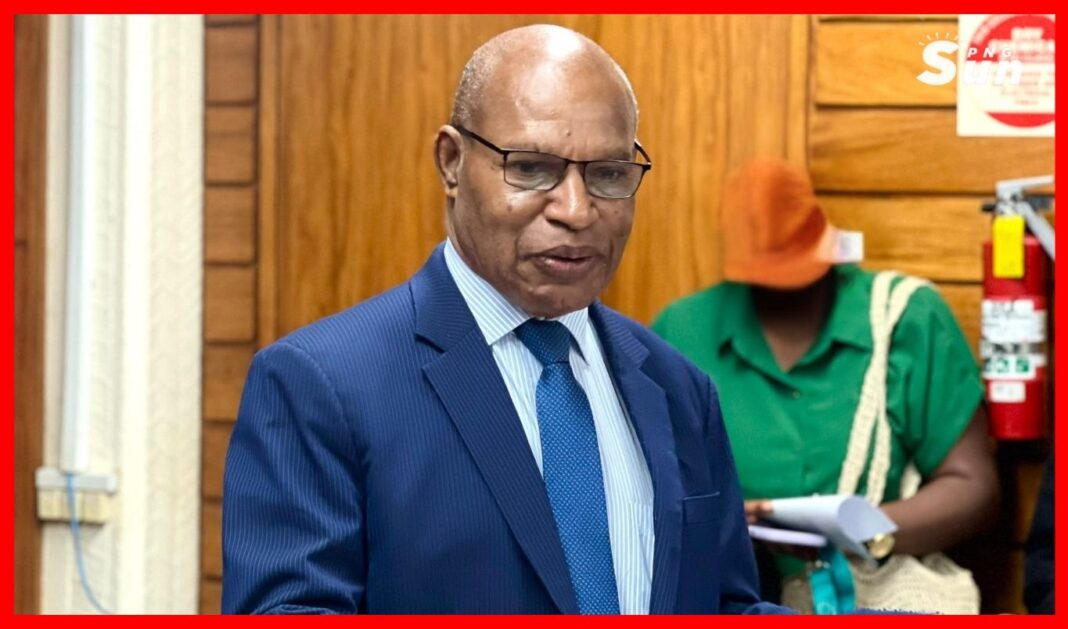

The Minister responsible for PNG Power Limited, Richard Maru says the Government will move to sell the utility’s loss-making B and C centres, which cost about K80 million annually, as part of efforts to reduce losses and prepare the company for partial privatization.
Minister Maru made the announcement during the swearing-in of PNG Power Limited’s new board of directors at the company’s headquarters in Port Moresby last Saturday, September 18.
Related news: https://www.onepng.com/2026/09/png-power-loss-making-centres-face-sale.html
He said he was preparing a submission to the Government to sell the B and C centres, which include Wewak, Manus, Kavieng, Alotau and Kimbe.
“These are centres who don’t make profits but lose money,” Mr. Maru said.
He said PNG Power was losing about K80 million a year from operating the centres.
Mr. Maru said the Government wanted private-sector and provincial government partners to take responsibility for the grids, including through ownership arrangements.
He said donor partners could also support renewable energy projects, including solar power, in the affected areas, while provincial governments could participate through equity.
Under the proposed restructuring, Maru said PNG Power would retain three main grids — the Port Moresby Grid, Ramu Grid and Highlands Grid.
“The new PNG Power will consist of these three grids,” he said.
Minister Maru said the current liabilities of PNG Power would remain with the restructured company, while the loss-making centres would be separated without transferring additional liabilities to them.
He said the profitable parts of PNG Power would have to take responsibility for raising funds to settle the company’s outstanding debts.
Mr. Maru said the Government wanted to reduce the company’s losses, improve its balance sheet and prepare it for partial privatization.
“We are on the path to sell the loss-making businesses and save K80 million, make provincial and private-sector partners responsible for power,” he said.
He said the Government wanted private companies operating the centres to provide more reliable electricity and, where possible, cheaper power.
Maru said the restructuring was necessary as PNG Power currently had debts of about K1.3 billion and loans approaching K3 billion.
He also said the Government would seek discussions with PNG Power’s lenders to determine whether some loans could be converted into equity to strengthen the company’s balance sheet.
“We are going to talk to all of those who have given us loans to see whether some of them can convert their loan to equity so we can improve the balance sheet position of PNG Power and get it ready for sale,” he said.
He said the objective was to bring private-sector investment into PNG Power, with new capital used to build additional hydropower projects and improve the company’s electricity systems.
Related news: https://www.thepngsun.com/minister-maru-reveals-financial-crisis-at-png-power/
“The capital they bring in terms of equity should be used to build more hydros, improve our systems so the technical losses are reduced, and we can turn this business around very quickly,” Maru said.
He said the reforms were intended to create a more financially sustainable PNG Power while ensuring reliable electricity supply across the country.