

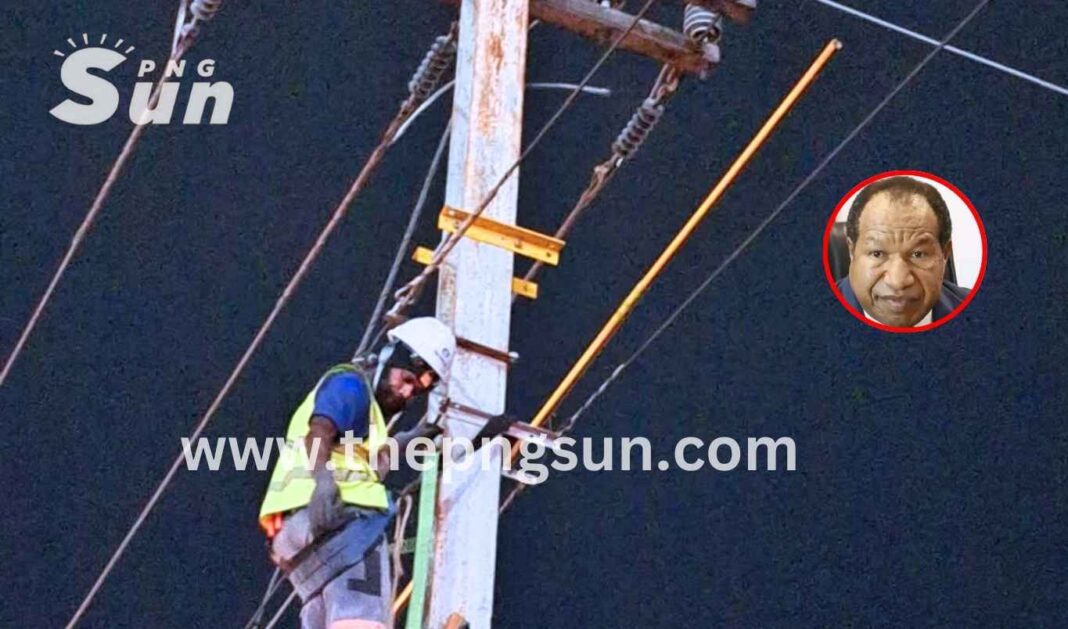

PNG Power Limited’s proposed partial privatisation is progressing well with the Minister for State Enterprises William Duma who wants no more delays in materialising it.
PPL is a State-owned monopoly energy company with private power producers boosting its power supply shortage.
“For many years, there have been a lot of talk, but no action in relation to the privatization of PPL,” he stated, making a firm commitment.
Minister Duma said the Marape-Rosso Government is moving forward with the partial privatisation, prioritizing options that benefit customers, investors, and serve the interests of the nation.
Minister Duma stressed that, the process of privatising an essential state-owned service is complicated and must be done properly and transparently.
The National Government is now equipped with restructuring scenarios proposed for the scheme of arrangement outlined by KordaMentha, which will form the basis of discussions and negotiations.
Minister Duma confirmed, “It has taken a lot of work and coordination to advance to this point, and I look forward to this effort continuing now that we have a roadmap and all parties must continue to make their contribution to negotiations.”
The proposed scenarios look at elements of PPL’s operations that could feasibly be privatised alongside potential timeframes involved.
The Minister noted the complexity of PPL’s infrastructure, which covers a range of grids from large down to micro levels, suggesting there may not be a standardised approach to each of these networks.
While acknowledging that PPL is a liability to the state, Minister Duma maintained the company holds significant commercial potential—points currently under review by the National Executive Council (NEC).
The NEC has provided a clear path forward:
Corporate Plan Approval:
■The NEC has approved the 2024-2026 PPL Corporate Plan.
■Tender Directive: The NEC directed that tenders be prepared consistent with the decision on partial privatisation.
This followed the NEC’s earlier approval of the PPL Privatisation Road Map, which led to KCH hiring professional consultants to aid in stabilisation and privatisation efforts.
Consultant reports covered crucial areas, including stabilisation plans, solvency tests, legal review, valuation, and an information memorandum for privatisation.
A significant part of the findings were consistent with previous market analysis, according to the Minister.
The reports confirmed: “A short-term stabilisation plan is needed to improve PPL’s financial performance and cash flow in preparation for partial privatisation.
The current solvency position is clear that shareholder contributions are required to maintain operations during the transition to partial privatisation.
Creditors and current court claims should be attended to prevent delays in the process.”
He affirmed that, the Marape-Rosso Government will deliver PPLs partial privatisation with due consideration of all issues, serving the interests of Papua New Guinea and investors.