


The National Statistical Office (NSO) will modernize Papua New Guinea’s data collection and processing system through an Integrated Statistical Production System (ISPS) to improve the quality, accuracy and timeliness of official statistics.
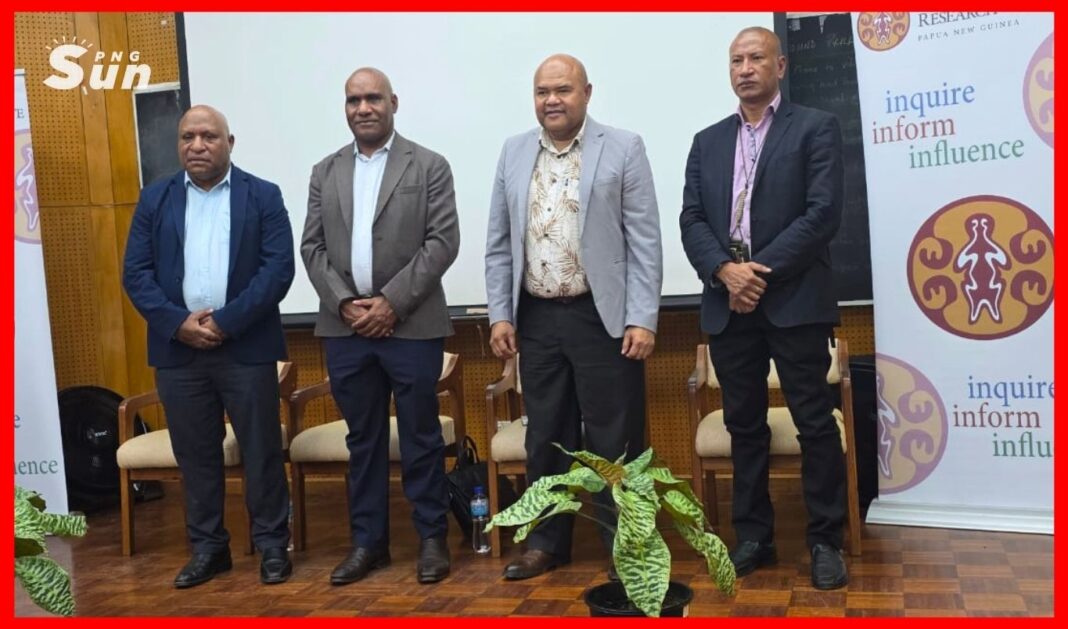
National Statistician Alfred Mokae announced the initiative during the PNG National Research Institute Chairman’s Seminar in Lae yesterday, saying the new system would strengthen data governance and support evidence-based decision-making across government.
Mr. Mokae said in a statement that the Integrated Statistical Production System would improve collaboration between government agencies through the National Statistical System and allow administrative data to be better integrated with traditional census information.
“A key focus will be the integration of administrative data, which can provide more frequent and timely insights into the nation’s social and economic health than traditional censuses alone,” he said.
He said reliable statistics were essential for effective governance, national planning and sustainable development.
“Reliable statistics are the true foundation of good governance, effective planning and sustainable development. Investing in the National Statistical System is not just a technical requirement; it is a direct investment in the future of our country,” Mr Mokae said.
He said the NSO remained committed to providing accurate and timely statistics to support informed decision-making at every level.
“By embracing modernization and collaboration, we can build a stronger, data-informed Papua New Guinea for all our people,” he said.
Mr. Mokae said the NSO operated under the Statistical Services Act 1980, which gives it responsibility for conducting national population censuses, household surveys and maintaining national statistical standards.
He said accurate population data underpinned planning for health, education, infrastructure development, budget allocation, elections, disaster management, the Sustainable Development Goals and Vision 2050.
Mr. Mokae explained that the NSO conducted a national census every 10 years to provide a complete count of the population, while household surveys carried out between censuses collected more detailed social and economic information.
He said the office followed the internationally recognized Generic Statistical Business Process Model (GSBPM) to ensure official statistics met global quality standards.
“Implementing GSBPM allows the NSO to maintain consistency and quality across all our diverse data programmes,” he said.
Mr. Mokae also highlighted the technological improvements introduced during the 2024 National Population Census through the use of Computer-Assisted Personal Interviewing (CAPI).
He said replacing paper questionnaires with mobile tablets and smartphones had improved the speed and accuracy of data collection while allowing immediate validation in the field.
Once transmitted to the NSO’s central server, the information is stored in a raw database before being cleaned, validated and transferred into a statistical database for analysis and reporting.
Mr. Mokae said the NSO’s long-term vision was built on the principle of “Collect Once, Use Many Times”, allowing data to be shared across agencies such as the Internal Revenue Commission, Electoral Commission, Department of Information and Communications Technology and other government departments.
He cited the partnership between the NSO and the PNG Electoral Commission as an example, with population estimates helping update the electoral roll, manage polling arrangements and support constituency boundary reviews.
“By working together, these agencies ensure that every citizen’s right to be counted translates into their right to participate in our democracy,” Mr. Mokae said.