

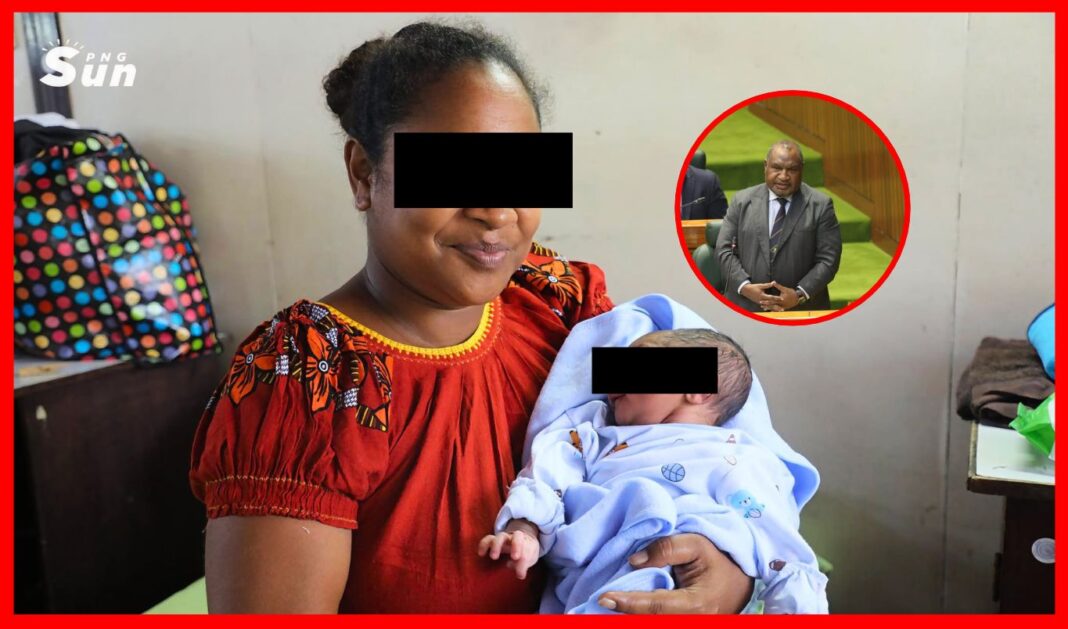

PNG Prime Minister James Marape has urged young Papua New Guinean couples to practice responsible family planning, warning that raising one child to 22 years could cost about K102,700, placing significant financial and emotional pressure on households.
Prime Minister Marape in a statement earlier on Monday said children were a blessing, but parents must carefully consider their ability to provide adequate food, healthcare, education and other necessities before deciding how many children to have.
Related news: https://www.postcourier.com.pg/pm-marape-urges-young-couples-to-practice-responsible-family-planning/
“Raising a child is a responsibility that lasts more than 20 years. Every child deserves proper care, education, nutrition and the opportunity to build a better future,” he said.
The Prime Minister provided a simple illustration of the potential cost of raising one child in Papua New Guinea from birth to 22 years of age.
He said parents spending an average of K50 per week during the first five years would incur approximately K13,000 in expenses.
Between the ages of five and 12, spending K75 per week would amount to K27,300, while K100 per week between 12 and 18 would total K31,200.
From 18 to 22 years, parents spending K150 weekly to support university, college, vocational training or early adulthood would incur another K31,200.
“Altogether, that is approximately K102,700 to raise and support just one child to the age of 22. For three children, the amount could exceed K308,000, while six children could cost more than K616,000,” Prime Minister Marape said.
“These are illustrative figures, not official national averages. Actual costs vary between rural and urban households, and these calculations exclude pregnancy, childbirth, major medical expenses, university tuition, accommodation and other extraordinary costs.”
Prime Minister Marape said that although the Government continued to support education through school fee assistance programmes, parents remained responsible for food, clothing, transport, school lunches, healthcare and other daily expenses.
He said many parents also continued supporting their children after graduation, particularly during periods of unemployment and other challenges of adult life.
“Financial pressure can place enormous stress on families, especially when parents have more children than they can reasonably support,” he said.
“We must also recognise that customary land is becoming increasingly scarce in many communities as populations grow and land is divided among successive generations.”
Prime Minister Marape encouraged couples to make informed decisions about family planning, including seeking medical advice on appropriate contraceptive methods.
“Many pregnancies are unplanned. Young couples must understand that a few moments of pleasure can result in more than 20 years of financial and emotional responsibility,” he said.
“There is nothing wrong with having a large family if parents have the resources and capacity to provide for their children. However, for many young couples, having two or three children may be a more manageable choice.
“Family planning must always be a voluntary and informed decision based on each couple’s circumstances.”
Prime Minister Marape said responsible parenthood was not measured by the number of children a family had, but by the quality of care, education and opportunities provided to them.
Related news: https://www.thepngsun.com/brace-for-tough-times-as-el-nino-rising-fuel-prices-and-high-import-costs-tighten-grip-on-our-country-pm-marape-to-his-citizens/
“Our children deserve the best possible start in life. I encourage all Papua New Guineans, especially our young people, to plan their families responsibly, live within their means and prepare their children for a better future.
“Responsible parenthood is not about how many children we bring into this world, but how well we raise and prepare them for life,” Prime Minister Marape said.