

Prime Minister, James Marape has called for lessons from previous elections to be used to address weaknesses in polling, voter identification, security and election logistics as preparations begin for the 2027 National General Election.
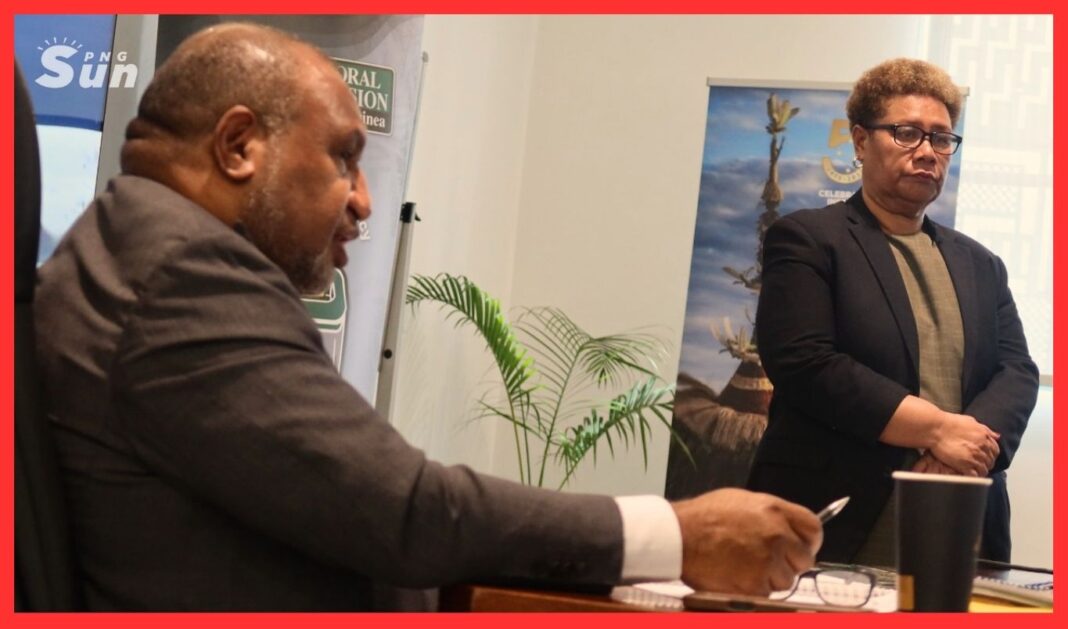
Speaking at a national election preparation dialogue in Port Moresby attended by ministers, MPs, political party leaders, constitutional office holders and key government agencies, PM Marape directed election authorities to strengthen planning, make greater use of election data and focus resources on areas with a history of electoral challenges.
Related news: https://www.postcourier.com.pg/marape-urges-better-planning-and-public-service-support-for-2027-election/
He also instructed the Papua New Guinea Electoral Commission and relevant State agencies to provide detailed statistical reports on past elections, including success rates, failure rates, hotspot areas, voter identification issues and polling challenges.
“We do not want the 2027 election to be a failed election. You have enough experience. You have run elections before, and we must now use that experience properly,” PM Marape said.
He said election challenges were not uniform across the country and planning should concentrate on provinces, districts and communities where electoral problems had occurred rather than areas with a strong record of orderly polling.
“Some villages do not have problems. They know who their voters are. They hold themselves accountable.”
“We should not waste so much time and resources where elections have always been orderly,” he said in a statement.
PM Marape said some urban centers, Highlands provinces and other known trouble spots would require stronger planning, enhanced security and more targeted deployment of election resources.
The Prime Minister also called for a review of the one-day polling system, particularly in remote locations where logistical constraints often limit voter participation.
“How do you expect places where helicopters drop polling teams at 11 o’clock and pick them up again at one o’clock to conduct proper polling?” he asked.
“Instead of one-day polling everywhere, let us look at two-day or three-day polling in certain places. Let us spread resources properly. Let us give our people a fair opportunity to vote.”
He said the Government would consider staggered polling schedules where necessary to improve coordination of security personnel, logistics and election officials.
PM Marape said communities often criticized during elections should be given an opportunity to demonstrate responsible participation.
“I want to give to my Highlanders, who are always accused and often portrayed negatively, the opportunity to cast their votes properly,” he said.
“Let us construct elections differently where necessary. If we have enough police resources and enough planning, we can manage this better.”
The Prime Minister also directed that public servants, teachers, police officers, military personnel and election officials involved in the election process uphold high standards of professionalism and integrity.
“Everybody involved must sign undertakings against illegal practices and corruption,” he said.
“Election officers serve the State and the people. They do not serve politicians.”
He said election operations should rely primarily on existing public servants rather than excessive use of temporary workers.
PM Marape said teachers, pastors, public servants and members of the disciplined forces could play an important role in election administration, particularly in rural communities where they are trusted by local residents.
He called for closer coordination between the Chief Secretary’s office, the Department of Education, Public Service Commission, Teaching Service Commission, provincial administrations and the Electoral Commission to align polling periods with school holidays.
According to PM Marape, this would allow teachers and public servants to assist with election duties while minimizing disruptions to education and other essential government services.
He said hospitals and other critical services must remain operational during the election period but stressed that the wider public service should regard election delivery as a national priority.
The Prime Minister also directed that election allowances be paid through existing government payroll systems to improve transparency and reduce opportunities for abuse.
He said the Government would continue working closely with the Electoral Commission, constitutional offices, security agencies, ministers and provincial administrations as preparations for the 2027 election intensify.
Another review meeting will be held within two weeks, followed by a broader stakeholder update later in July.
PM Marape said ensuring a credible and well-managed election must remain a national priority.
“There is no greater activity next year than preparing for this election,” he said. “Let us prepare properly. Let us work together. Let us do our best for the people of Papua New Guinea.”