


Police have frozen K4 million in suspected stolen public funds linked to a foreign-owned company, taking the total value of assets and funds restrained under anti-money laundering investigations to more than K200 million.
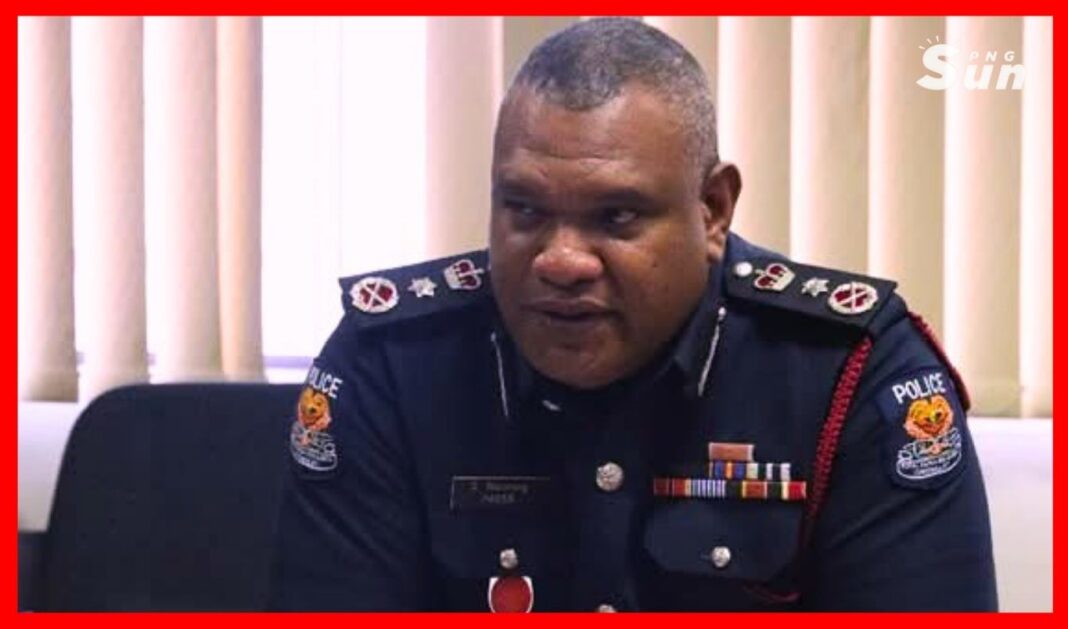
Police Commissioner David Manning in a statement issued today said the money formed part of K7 million paid by a District Development Authority to a company owned by a foreign national for the alleged supply of infrastructure components.
He said K3 million had already been withdrawn in cash before police froze the remaining K4 million.
“This is one of several active investigations where police are moving to restrain stolen funds and prosecute those involved,” Commissioner Manning said.
“The message is simple: if you steal public money, we will find it, freeze it and take it back.
If you helped move it, hide it or ignore the warning signs, you are also on notice.”
Commissioner Manning said the Proceeds of Crime Act 2022 had strengthened the powers of police and partner agencies to trace, restrain and recover proceeds of corruption, particularly money stolen from government agencies.
He said Papua New Guinea’s efforts to exit the Financial Action Task Force grey list required stronger action against money laundering and financial crime.
“Papua New Guinea will exit the Financial Action Task Force Grey List, and that means there can be no tolerance for dirty money, weak compliance or deliberate blindness,” he said.
Commissioner Manning said the Royal Papua New Guinea Constabulary, the Bank of Papua New Guinea’s Financial Analysis and Supervision Unit, and the Office of the Public Prosecutor were working together under the Anti-Money Laundering and Asset Recovery Office (ARROW) to strengthen financial crime investigations.
He said modern analytical systems were now being used to detect unexplained wealth, suspicious financial transactions and movements of money inconsistent with lawful income.
“These systems are helping us follow the money faster, connect the accounts and expose the people behind the transactions,” he said.
Commissioner Manning warned banks and other financial institutions that they must meet their legal obligations to detect and report suspicious transactions.
“Financial institutions are now on notice. Banks and reporting entities must know their customers, question suspicious transactions and urgently refer to police any red flags,” he said.
“Where public funds move through an account and a financial institution fails to ask the obvious questions, those institutions have failed in their obligations.”
“Negligence, willful blindness or facilitation will be investigated and charges will follow.”
He said police would continue targeting corrupt individuals and those who enable the movement of stolen public funds.
“We are squeezing the corrupt and those who enable them. The money trail is no longer a safe place to hide,” Commissioner Manning said.