

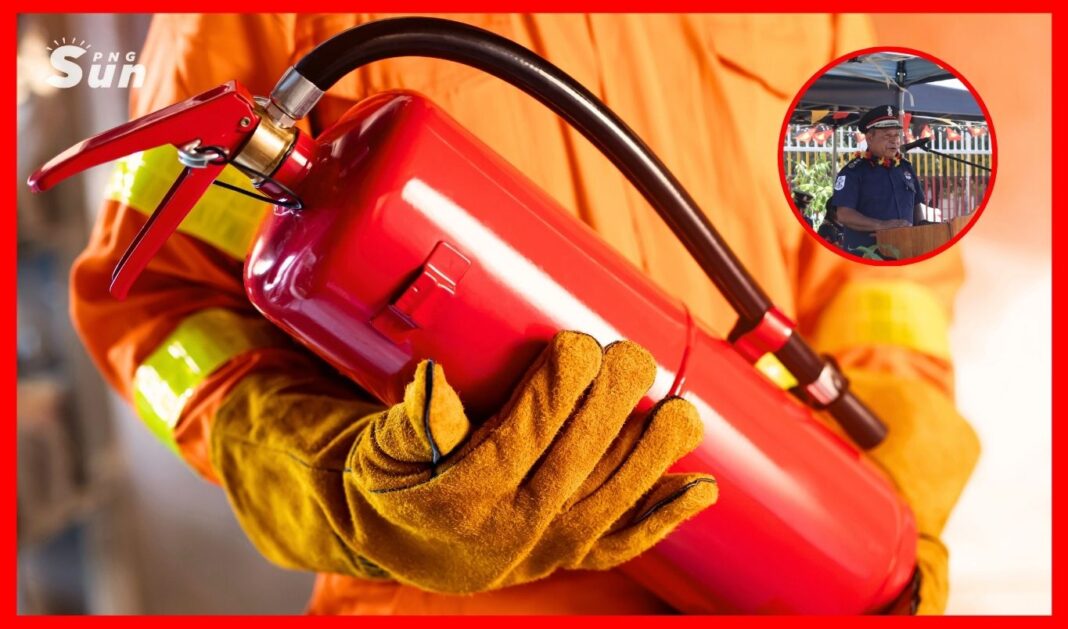

The Papua New Guinea Fire and Rescue Service has issued an urgent nationwide warning, urging the public to take extra precautions as prolonged dry weather increases the risk of bushfires, grass fires and structural fires.
Chief Fire Officer Bill Roo in a statement said the dry conditions, driven by El Niño, have created dangerous fire conditions across the country.
“Even a small spark in this weather can destroy homes and properties within minutes. We need every citizen to take responsibility for fire safety in their homes and communities,” Mr. Roo said.
He said the Fire Service was facing operational challenges at a time when demand for emergency responses was increasing.
Mr. Roo said funding constraints over several years had left many fire trucks out of service because of mechanical faults and unpaid servicing costs, reducing the agency’s ability to respond quickly to emergencies.
He also revealed that water shortages in some urban areas were making firefighting operations more difficult.
“We are also facing water shortages in some parts of town where water supplies are controlled, and some areas are completely shut down. This is making firefighting even more difficult during emergencies,” he said.
Despite the challenges, Mr. Roo said firefighters remained committed to protecting lives and property.
“We are limited but we are still here to protect lives and properties. What will help us most right now is the public cooperation to prevent fires before they start,” he said.
The Fire Service has urged the public not to burn rubbish or light fires near homes, power lines or dry grass, to keep matches and lighters away from children, switch off electrical appliances when not in use, report fires immediately to the nearest fire station, and conserve water while helping firefighters identify alternative water sources during emergencies.
Mr. Roo said preventing fires was everyone’s responsibility.
“Fire prevention and fire safety are shared responsibilities. Let us work together to prevent as many fires as we can and avoid disasters,” he said.