
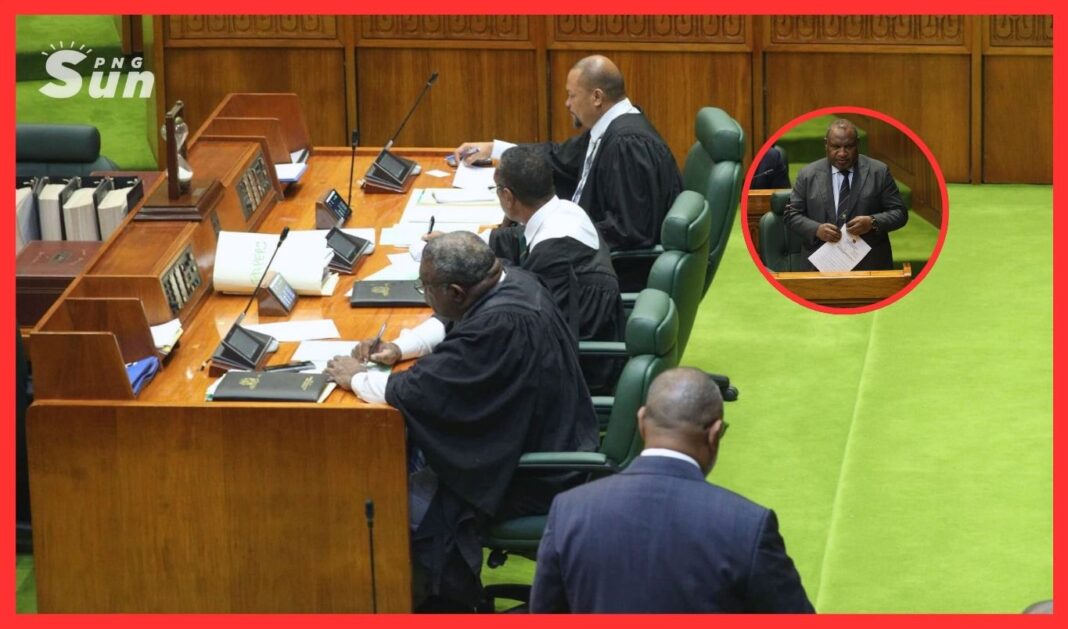

PNG Deputy Opposition Leader Keith Iduhu yesterday questioned the proposed governance structure for the 4.27 percent PNG LNG equity allocation during Parliament.
Mr. Iduhu raised concerns over the lack of dedicated representation for plant site landowners and the Central Provincial Government in the planned Special Purpose Vehicle (SPV).
The matter was raised during Question Time, with Mr. Iduhu directing questions to Prime Minister James Marape over NEC Decision 64-2026.
The decision establishes an interim board structure for the SPV that will manage the 4.27 percent equity stake allocated to PNG LNG landowners and impacted provincial governments.
Mr. Iduhu argued that while the proposed structure includes representation for several provinces and project areas, it does not provide a dedicated seat for the Central Provincial Government or the plant site landowners.
He said his district hosts the PNG LNG processing facility, storage tanks, and marine export terminal.
He said the commercial viability of the PNG LNG project is directly linked to the plant site infrastructure and argued that communities hosting those facilities should have permanent representation within the SPV structure.
Mr. Iduhu also questioned the legal basis for excluding Central Province and plant site landowners from dedicated representation despite their role as host communities under existing PNG LNG agreements.
Prime Minister James Marape defended the government’s proposed structure, saying the 4.27 percent allocation was originally created as a policy measure to recognize about 60,000 landowners across five provinces connected to the PNG LNG project.
He said the allocation was not a legal entitlement under petroleum law, but a government policy decision aimed at ensuring broader participation in project benefits.
According to Mr. Marape, the SPV structure was designed to include all affected landowners, including upstream Petroleum Development License (PDL) areas, pipeline communities, and plant site landowners.
He said provinces with major upstream gas resources, particularly Hela and Southern Highlands, were granted permanent representation because of their significant contribution to gas supply and the complexities involved in maintaining stability among upstream landowner groups.
PM Marape said Gulf, Western, and Central provinces would participate through a rotational representation system on the board.
He stressed that the government did not intend to exclude any community but wanted to establish a structure capable of generating long-term wealth for future generations rather than simply distributing cash benefits.
“This should have an element of a sovereign wealth fund attached to it,” Mr. Marape told Parliament, adding that the structure would be subject to further consultation with leaders and landowner representatives.
Related news: https://www.thepngsun.com/pm-marape-defends-png-lng-equity-restructure-amid-parliament-questions/
He also reaffirmed that benefit-sharing arrangements had already been outlined under the 2009 Umbrella Benefits Sharing Agreement (UBSA) and related Landowner Benefits Sharing Agreements (LBBSA).
The agreements include predetermined allocations for plant site communities, pipeline groups, and upstream PDL areas.