

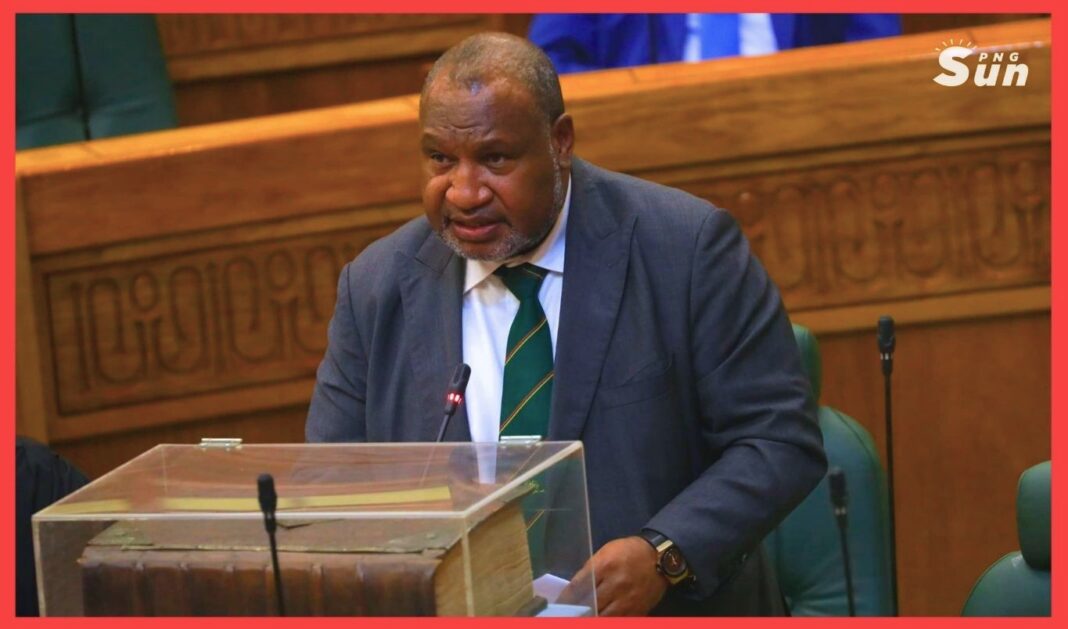

Prime Minister, James Marape yesterday tabled the Prime Minister (Amendment) Bill 2026 in Parliament, describing it as a decisive reform aimed at strengthening accountability, improving efficiency, and ensuring the effective implementation of Government decisions across Papua New Guinea’s Public Service.
The Bill seeks to empower the Chief Secretary to Government with enhanced authority to monitor, evaluate, and enforce performance standards across all Government departments and agencies—ensuring that policies and decisions made at the highest level translate into tangible results for citizens.
Related news: https://www.postcourier.com.pg/pm-marape-tables-prime-minister-amendment-bill-to-overhaul-public-service-performance/
Importantly, the bill will empower the Chief Secretary to fire heads of public service if they fail to deliver. In the last 50 years, the Ministers are political heads of departments and government agencies.
Prime Minister Marape said the reform is not merely legislative in nature, but a critical step toward transforming the way Government delivers services to the people.
“This Bill is not merely a legislative amendment. It is a statement of intent—a clear signal that this Government is serious about delivery, accountability, and results,” Prime Minister Marape said.
He emphasized that the amendment is aligned with the Government’s broader Reset@50 Agenda, which focuses on moving beyond planning to actual implementation as the country marks 50 years of Independence.
“As we mark 50 years of nationhood, Reset@50 is about ensuring that the next phase of our development is defined not by plans alone—but by implementation.”
Prime Minister Marape highlighted that the Public Service remains the engine of Government, responsible for delivering services to over 10 million Papua New Guineans.
“It is about ensuring that the engine of Government—our Public Service—is operating at full capacity to serve our people.”
The amendments address long-standing structural gaps by aligning responsibility with authority, particularly at the level of the Chief Secretary.
He noted that while the Chief Secretary has always been tasked with overseeing implementation of National Executive Council (NEC) decisions, existing laws have not adequately empowered the office to enforce compliance.
“The law, as it stands, gives responsibility—without sufficient authority. This creates a fundamental imbalance. This Bill corrects that.”
Prime Minister Marape reassured Parliament and the public that the reform does not create new institutions or impose additional financial burden on the State.
“This reform is practical and responsible. It does not create new institutions. It does not require additional budget. It strengthens existing systems and aligns them to deliver results.”
The Prime Minister outlined several key changes introduced by the Bill, including performance-based management through the establishment of Key Result Areas (KRAs) and Key Performance Indicators (KPIs) for departmental heads and agency leaders, a structured evaluation system with transparent and data-driven performance scoring.
This is to enhanced monitoring and reporting through mandatory periodic reporting and real-time tracking of Government programs, enforcement powers for the Chief Secretary to require compliance and recommend disciplinary action for non-performance, and public accountability measures to make performance scorecards accessible.
“No longer will performance be subjective. It will be measurable, data-driven, and transparent,” the Prime Minister stated.
Prime Minister Marape said the Bill sends a strong message to departmental heads and Public Service leaders that leadership must deliver results.
“Our people are tired of excuses. They want to see roads built, medicines delivered, and schools staffed. The State provides you with a high office and significant resources. In return, the State—and the people—demand results.”
He stressed that the Chief Secretary will now be equipped with the tools necessary to monitor performance in real time and take swift action when standards are not met.
Prime Minister Marape welcomed the constructive debate and contributions from both Government and Opposition Members during the tabling of the Bill, noting that the reform reflects a shared national interest in improving governance.
The Bill was eventually passed on voices by Parliament.
The Prime Minister reiterated that the reform is ultimately about ensuring that Government decisions are implemented efficiently and effectively.
“When I make a policy announcement, I expect the bureaucracy to act—to follow through and deliver. This Department must function as the nerve center of Government, connecting all agencies and ensuring that NEC decisions are translated into action.”
Prime Minister Marape concluded by commending the Bill to Parliament as a critical reform to modernize governance, strengthen accountability, and improve service delivery for all Papua New Guineans.
“This Bill is a critical step in our journey to build a more responsive, accountable, and results-driven Government.”