

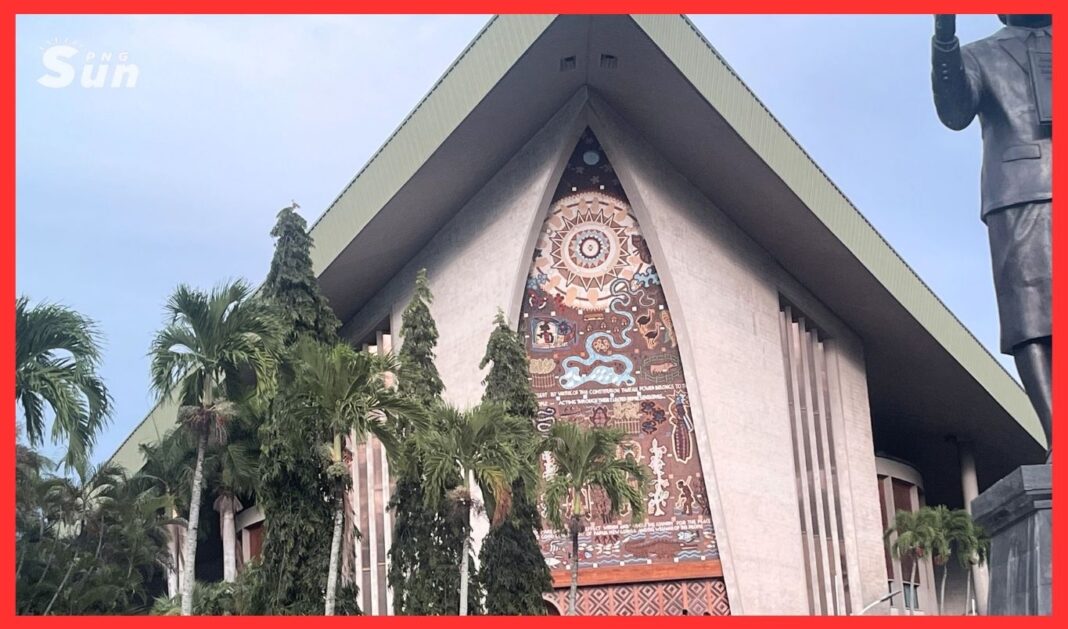

The tabling of the Parliamentary Bougainville Committee consultation report in the National Parliament this week has reignited one of Papua New Guinea’s most important national conversations-Bougainville’s political future.
As Members of Parliament debated the report, mixed reactions emerged.
Some see the discussions as a possible prelude to Parliament’s eventual consideration of the Bougainville Referendum result, while others remain cautious about the path ahead.
Related news: https://abg.gov.pg/index.php?/news/read/media-statement-from-the-office-the-president
What must not be forgotten is that the Bougainville issue is not merely a political debate. It is a story written in sacrifice, suffering, reconciliation and trust.
The Bougainville Peace Agreement was built on three fundamental pillars: Autonomy, Referendum and Weapons Disposal.
Two of these pillars have largely progressed. The Autonomous Bougainville Government has been established and functioning for years, while the referendum was successfully conducted, producing an overwhelming vote in favor of independence.
However, the third pillar-weapons disposal-remains a critical concern. The emergence of a kingdom on the island is also detrimental to ABG and her people’s aspirations. Not only that, but there are also elements of rebel groups.
The ABG through its police force must fix these issues. Have them arrested if you want independence. Demonstrate to PNG that you are capable of running your own affairs.
The peace agreement was carefully crafted to ensure that lasting peace, stability and security would accompany any future political settlement.
The continued presence of weapons and armed groups in some parts of Bougainville raises legitimate concerns that must be addressed comprehensively before any final political outcome is implemented.
At the same time, Bougainville’s leaders must continue demonstrating that the autonomous government can effectively manage its own affairs.
Good governance, financial discipline, accountability, service delivery, law and order, and economic development are not optional requirements.
They are essential foundations for any nation seeking greater political authority.
History also demands fairness in this discussion.
Bougainville, then known as North Solomons, declared independence on September 1, 1975, before Papua New Guinea itself gained independence on September 16, 1975.
The Panguna Mine helped build modern Papua New Guinea, contributing enormous export earnings and government revenue.
Yet Bougainvilleans bore much of the environmental, social and human cost associated with that development.
During the Bougainville Crisis, between 15,000 and 20,000 lives were lost. Families were displaced, communities divided, and basic services collapsed.
For more than a decade, Bougainville was largely cut off from normal development opportunities enjoyed elsewhere in the country.
The Bougainville Peace Agreement and the referendum were not gifts from one side to another.
They were solemn commitments made to end a devastating conflict and secure a lasting peace for future generations.
For that reason, Parliament’s eventual consideration of the referendum result must be approached with wisdom, maturity and respect for the commitments that were made.
Recognizing Bougainville’s aspirations should not be viewed as creating a dangerous precedent for other provinces to break away from Papua New Guinea. Bougainville’s circumstances are unique.
Its history, conflict, peace process and internationally recognized agreements distinguish it from any other region in the country.
The challenge before both Port Moresby and Buka is therefore not whether promises should be honored, but how they should be honored responsibly.
Bougainville’s leaders must continue strengthening governance, improving service delivery and addressing outstanding security concerns.
The National Government and Parliament, meanwhile, must carefully consider the spirit and letter of the Peace Agreement that ended one of the darkest chapters in our nation’s history.
When future generations look back on this period, they will not remember who spoke the loudest in Parliament or on social media.
They will remember whether leaders on both sides honored their commitments, upheld the peace, and acted with courage and integrity.
That is the true test of leadership. And that is the responsibility history now places upon us all.