

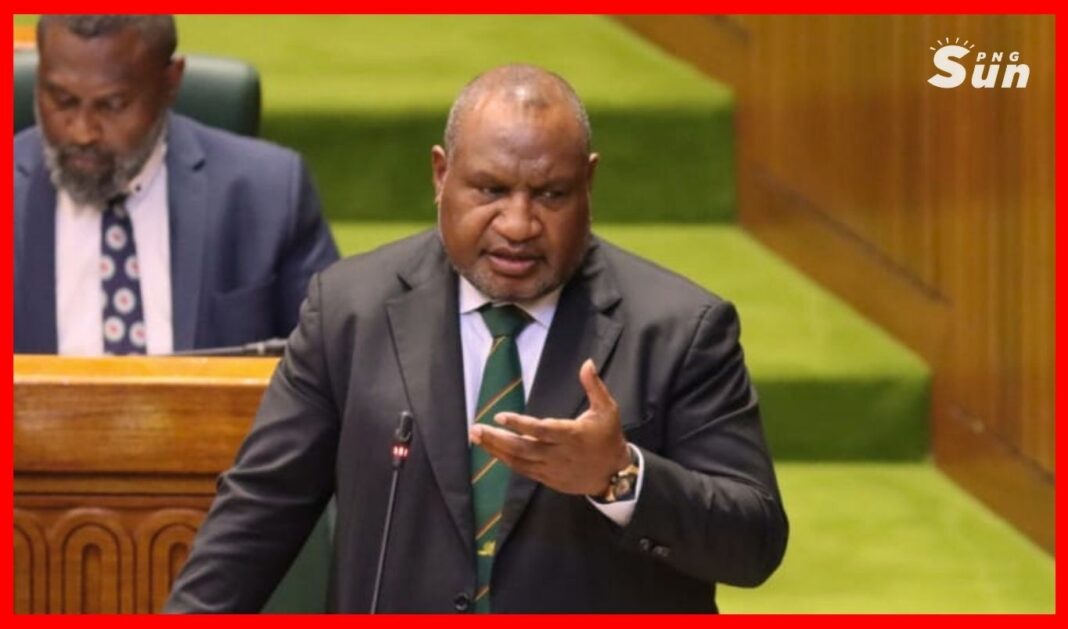

Prime Minister James Marape has defended the appointment of Acting Independent Commission Against Corruption (ICAC) Commissioner Don Sawong, insisting the Government does not interfere in the commission’s operations and that all appointments are made through an independent, merit-based process.
Responding to public and political criticism over recent leadership changes at ICAC, Mr. Marape said the appointments of retired Judge Don Sawong as Acting Commissioner and Thomas Eluh and retired Justice Ellenas Batari as Acting Deputy Commissioners were made by the legally constituted ICAC Appointments Committee, not by the Government alone.
He said ICAC’s operational independence remained protected under the Constitution.
“My Government, under my watch, does not interfere with or impose itself upon the everyday operations of ICAC,” Mr. Marape said in a statement last night.
“The former substantive commissioner and deputy commissioners, as well as the present acting leadership, can confirm that I have never directed ICAC on whom to investigate, how to conduct its investigations or how to discharge its constitutional responsibilities.”
Mr. Marape rejected claims that Mr. Eluh had been unfairly removed from the acting commissioner’s role, saying he remained an important member of the commission’s leadership as Acting Deputy Commissioner.
He said appointments to constitutional offices were determined by legal qualifications and merit rather than politics or public opinion.
“Appointments to constitutional offices are not based on political support, public popularity, personal preference or entitlement. They are based on the law, prescribed qualifications, due process and merit,” he said.
The Prime Minister explained that one of the legal requirements for appointment as ICAC Commissioner is that the person must be qualified to serve as a judge, which was a key reason retired Judge Sawong was selected as Acting Commissioner.
Mr. Marape also reminded critics that the ICAC Appointments Committee includes both Government and Opposition representatives, including Opposition Leader James Nomane.
He said the substantive positions of Commissioner and Deputy Commissioners had been publicly advertised, and applicants would be assessed through an open recruitment process before recommendations were considered by the committee.
To strengthen public confidence, Mr. Marape said Transparency International Papua New Guinea had been invited to observe the recruitment process.
“Transparency International is not part of the Government. It is an independent organization known for advocating against corruption and promoting integrity,” he said.
“I want them involved throughout the process so Papua New Guineans can have confidence that the recruitment and appointment of ICAC’s permanent leadership is conducted honestly, transparently and without improper political influence.”
Mr. Marape said the Government remained committed to building ICAC into a strong and independent institution capable of investigating and combating corruption without political interference.
“We did not establish ICAC to control it. We established it so that it could independently protect public money, strengthen accountability and ensure that people entrusted with public responsibilities are held to the law,” he said.
He urged politicians and the public to avoid making unsupported allegations and allow the recruitment process to proceed in accordance with the Constitution and the law.