
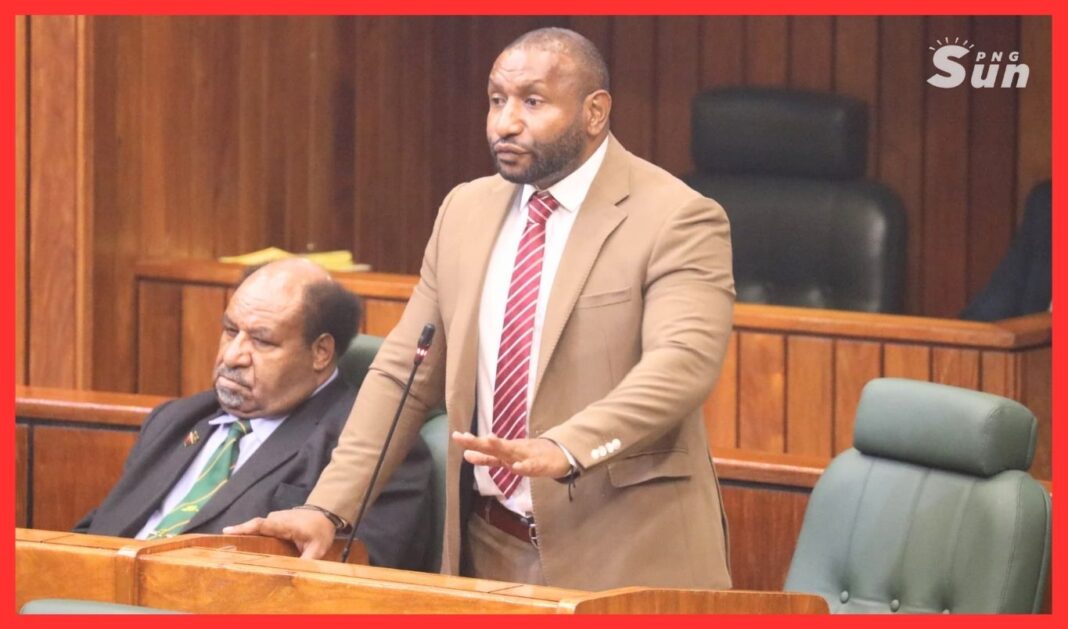

Morobe Governor Rainbo Paita, MP, has called on the Government to strengthen Papua New Guinea’s Christian identity and consider introducing proper oversight for religious ministries operating in the country.
Mr. Paita raised the issue in Parliament sitting yesterday during Question Time when directing a series of questions to Prime Minister, James Marape.
Related news: https://www.postcourier.com.pg/new-cpp-policy-to-recognise-churches-paita/
He welcomed the recent constitutional amendment that officially recognizes the country as a Christian country and praised the Government for supporting the teaching of Christian Religious Education in schools.
Mr. Paita said Christianity plays an important role in the lives of Papua New Guineans and remains one of the strongest institutions in the country.
He told Parliament that churches are present in almost every ward and community, often reaching places where government services are limited.
“Wherever you travel in Papua New Guinea, you will find churches serving the people. They are part of the daily lives of our communities,” Mr. Paita said.
The Morobe Governor said the country’s Christian identity should be reflected not only in the Constitution but also in national values and institutions.
He specifically suggested that the National Pledge, which currently states “we pay homage to our culture”, should be changed to “we pay homage to God”, to better reflect the country’s Christian foundation.
Mr. Paita also raised concerns about the growing number of self-proclaimed pastors, prophets and religious leaders operating throughout the country without any formal regulation.
He questioned whether the Government should establish a religious board or similar body to ensure church leaders meet proper standards of training and accountability before carrying out ministry work.
According to Mr. Paita, such a system would help protect communities and strengthen public confidence in religious organizations.
He also proposed the creation of a stand-alone ministry responsible for religion and faith affairs, saying churches have a major influence on the social and spiritual wellbeing of the people.
Responding in Parliament, Prime Minister James Marape welcomed the discussion and acknowledged the importance of the issues raised.
Mr. Marape said any proposal to amend the National Pledge or introduce new laws relating to religion would require broad consultation and careful consideration.
He encouraged Mr. Paita to formally submit his proposals through the appropriate parliamentary processes for further discussion.
The Prime Minister said Papua New Guinea’s Christian identity remains an important part of the nation’s values and future development.